

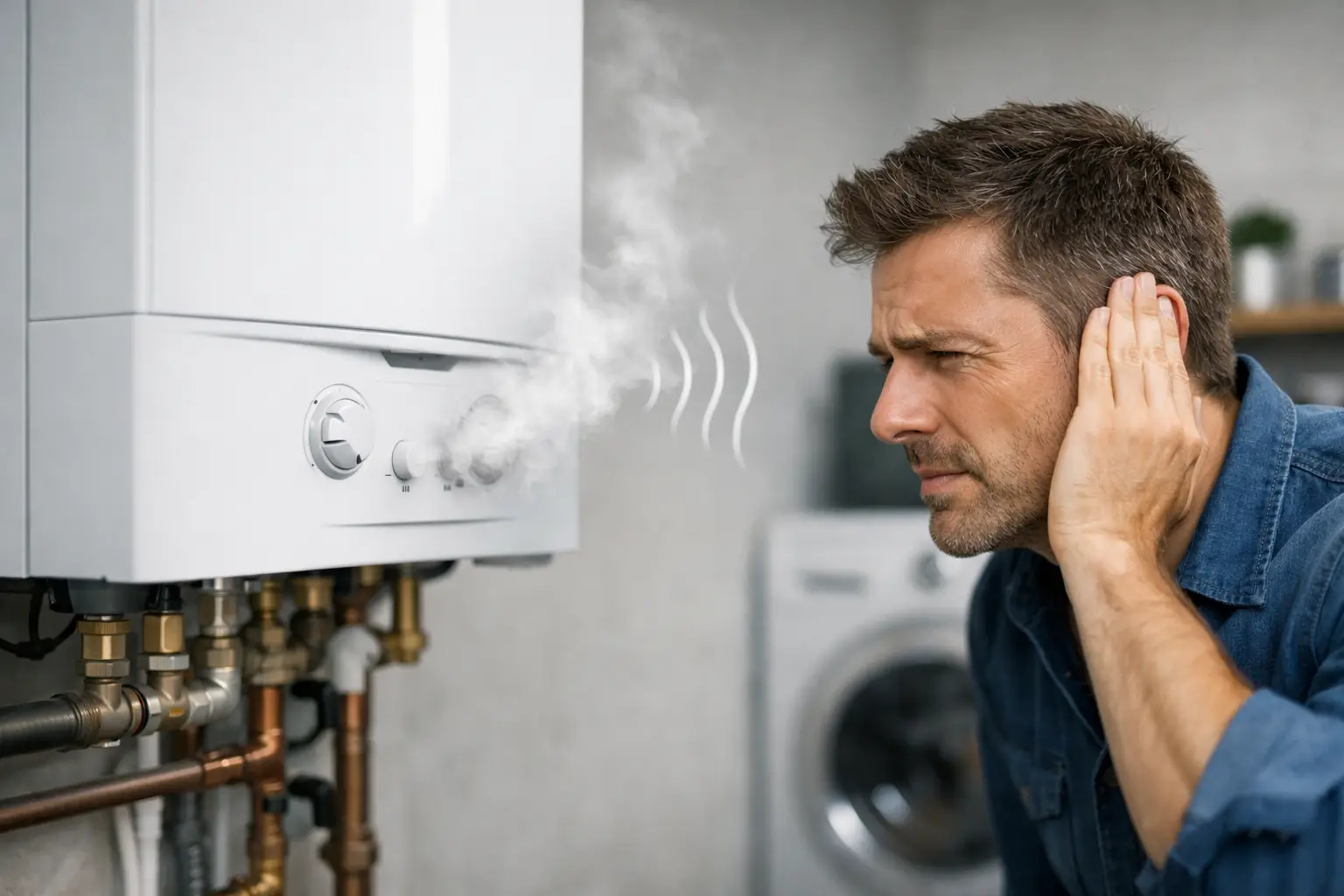
A boiler whistling noise can be unsettling, especially when it starts during a cold morning or just as your household needs hot water. Sometimes the sound is caused by a minor circulation issue. In other cases, it is a warning that your boiler is working harder than it should and needs professional attention before a small fault affects your heating, hot water or safety.
The useful detail is when the whistling happens. A noise that begins only when the heating fires up suggests a different issue from one that continues after the boiler has switched off. Rather than trying to diagnose or dismantle the appliance yourself, listen for the pattern, check for any warning lights or error codes, and arrange for a Gas Safe registered engineer to investigate where needed.
What causes a boiler whistling noise?
The most common cause is restricted water flow through the boiler. When water cannot circulate freely around the heat exchanger, it can become too hot in one area and start to steam or bubble. This is often called kettling because the noise can resemble a kettle coming to the boil. It may begin as a faint whistle and become more noticeable as the heating runs.
Limescale is a frequent contributor, particularly in hard-water areas of Kent. Over time, mineral deposits can build up inside the heat exchanger and narrow the routes through which water travels. Sludge and debris from an older central-heating system can have a similar effect. Neither issue is likely to resolve on its own, and leaving it can reduce efficiency and place extra strain on boiler components.
A whistling sound can also be linked to air in the system, a partly closed valve, low system pressure, a tired pump or a blockage in the pipework. Modern boilers contain fans and moving parts, so a low, brief operating sound is not always a concern. A new, high-pitched or persistent whistle is different. It is worth checking rather than assuming it is normal.
Kettling and restricted circulation
Kettling is more likely if the boiler becomes noisy shortly after the heating or hot water is switched on. You may also notice radiators taking longer to warm up, uneven heat around the home, rising energy bills or the boiler repeatedly switching itself off.
The right repair depends on the source of the restriction. An engineer may need to assess the heat exchanger, system water quality, pump performance and filters, rather than simply treating the symptom. In some cases, cleaning the system and fitting or servicing a magnetic filter can help protect against future sludge build-up. In others, a component repair or replacement may be the better long-term option.
Air, pressure and valve issues
Air trapped in radiators or pipework can create whistling, gurgling and rushing-water sounds. If one or two radiators are cool at the top while warm at the bottom, air may be present. Bleeding a radiator can be a straightforward household task if you are confident doing so and the system is cool, but it does not explain every boiler noise.
Check the boiler pressure gauge as well. Most sealed systems sit around 1 to 1.5 bar when cold, although the correct range for your boiler should always be confirmed in its manufacturer instructions. Pressure that is unusually low, rises sharply when the heating is on, or repeatedly drops may indicate a fault that requires an engineer. Do not keep topping up the pressure without finding out why it is changing.
A partially closed radiator valve or an issue with a thermostatic radiator valve can also affect circulation. If the whistle appears after changes to radiator settings, note which rooms were adjusted and tell the engineer. This can help speed up diagnosis.
Is a whistling boiler dangerous?
A whistle does not automatically mean there is an immediate danger, but it should not be ignored. Kettling and poor circulation can cause overheating, reduce efficiency and lead to more expensive repairs if left unresolved. Your boiler’s safety controls may shut it down before serious damage occurs, but repeated lockouts are still a clear sign that something needs attention.
There are a few situations where you should act promptly. Turn the boiler off if it is making a very loud or sudden noise, leaking water, producing burning smells, showing a fault code, or failing to provide reliable heating and hot water. Do not remove the boiler casing or attempt to repair internal parts yourself.
If you smell gas, suspect a gas leak, or your carbon monoxide alarm sounds, leave the property immediately if it is safe to do so. Call the National Gas Emergency Service on 0800 111 999 from outside, then arrange for a Gas Safe registered engineer to inspect the appliance. A whistling sound alone is not a reliable sign of a gas leak, but any concern about gas safety should always be treated seriously.
What you can safely check before calling an engineer
A few simple observations can make a visit more efficient without putting you at risk. First, look at the boiler display and make a note of any error code. Check whether the noise happens with heating, hot water, or both, and whether it starts immediately or after several minutes.
You can also look for obvious signs around the boiler and radiators, such as water beneath the appliance, cold patches on radiators, dripping valves or a pressure gauge outside its usual range. Keep the boiler’s make and model to hand if possible. These details give the engineer a clearer picture before they arrive.
Avoid taking off covers, adjusting gas controls or adding chemical cleaners to the system without advice. Boilers combine gas, electricity and pressurised water, so professional diagnosis is the safest route. A qualified engineer can test the appliance properly, identify the underlying cause and explain the recommended repair in plain English.
How a professional diagnosis helps
A proper boiler inspection is more than listening to the noise. The engineer will check system pressure, water circulation, pump operation, controls, pipework and the condition of relevant boiler components. They can also carry out the safety checks required for a gas appliance and look for signs that the system has sludge, scale or corrosion.
There is no single repair for every whistle. A relatively simple valve adjustment or radiator bleed may solve one household’s problem. Another home may need a system clean, a replacement pump, heat exchanger work or advice on whether an older boiler is becoming uneconomical to maintain. Honest recommendations matter here, because the most suitable solution depends on the boiler’s age, condition and service history.
For Maidstone and surrounding Kent households, Dacey Heating Engineers provides a friendly, transparent assessment focused on restoring safe, dependable warmth with as little disruption as possible. With more than 25 years of hands-on experience, the aim is to explain what has caused the issue and what your practical options are before work begins.
Preventing future boiler noises
Annual boiler servicing is one of the best ways to spot early signs of circulation problems before they become disruptive. During a service, an engineer can check that the boiler is operating safely and efficiently, identify wear on key components, and advise if system water quality needs attention.
It also helps to pay attention to gradual changes around the home. Radiators that need regular bleeding, rooms that no longer heat evenly, pressure that regularly falls, or a boiler that takes longer to warm water are all worth mentioning at your next service. Addressing these signs early is usually less inconvenient than waiting for a breakdown during winter.
If your system is older, ask whether a magnetic filter, powerflush or inhibitor treatment is appropriate. These are not automatic solutions for every property, but when selected following an assessment, they can help reduce sludge and protect the heating system over time.
When should I book a repair?
Book a repair if the whistling is new, getting louder, recurring, or accompanied by poor heating performance, leaks, fault codes or changing pressure. A boiler that is still running can have an underlying issue, so it is better to arrange an inspection before it stops altogether.
Can limescale cause a boiler to whistle?
Yes. Limescale can restrict water flow through the heat exchanger, causing local overheating and kettling. A Gas Safe engineer can confirm whether scale is the cause and recommend the most appropriate remedy for your system.
Should I turn off a whistling boiler?
If the noise is loud, sudden, or accompanied by a fault code, leak, burning smell or loss of performance, switch the boiler off and seek professional advice. If there is a gas smell or carbon monoxide alarm, follow emergency gas safety guidance immediately.
A quiet home should not depend on ignoring unusual boiler sounds. Noting when the whistling occurs and arranging a timely professional check gives you the best chance of keeping your heating safe, efficient and ready when your household needs it.

