

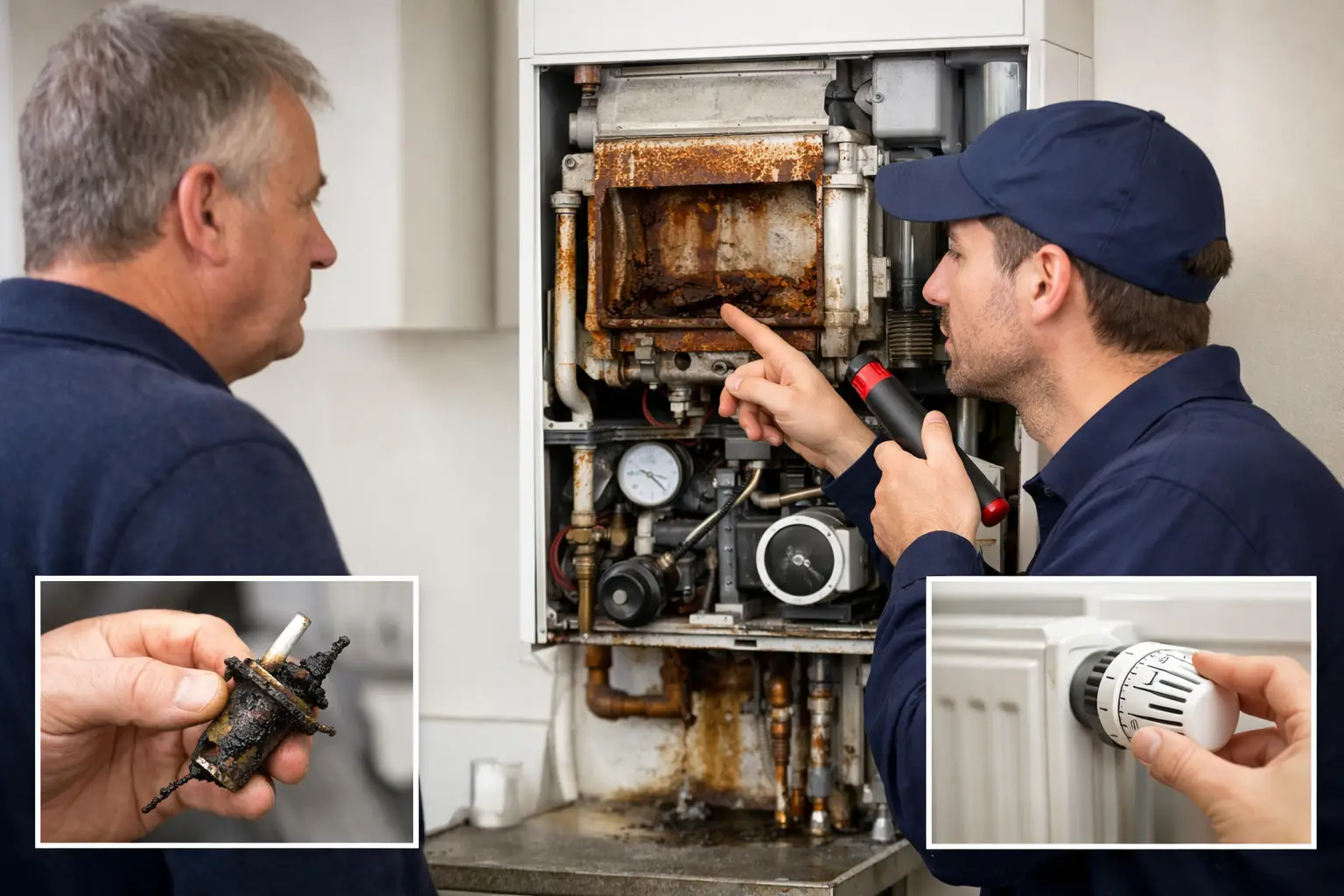
A boiler rarely chooses a convenient time to fail. It is often on the first properly cold morning of the year, just before guests arrive, or when everyone in the house needs a shower. Knowing the signs boiler needs replacing can help you make a calm, planned decision rather than facing an unexpected breakdown without heating or hot water.
Not every fault means you need a new boiler. Many problems can be resolved with a professional repair or routine service. However, an older, unreliable or inefficient boiler can become costly to run and harder to keep safe. The key is understanding when repairs still offer good value and when replacement is the more sensible long-term choice.
10 signs your boiler needs replacing
1. Your boiler is more than 12 to 15 years old
A well-maintained boiler can last for many years, but age matters. Once a boiler reaches around 12 to 15 years old, parts may be harder to source, repairs can become more frequent and its efficiency is likely to be lower than a modern model.
Its age alone does not automatically mean it must be replaced. A dependable older boiler with a clear service history may still have useful life left. But if it is beginning to develop faults, age is an important part of the decision.
2. Repairs are becoming regular and expensive
One isolated repair is usually no cause for concern. A worn component, faulty valve or ignition issue can often be fixed quickly by a qualified engineer. The picture changes when you are arranging call-outs every winter, replacing several parts, or paying for repairs that cost a significant proportion of a new boiler.
Repeated repairs do not always restore reliability. If the same fault returns or new faults keep appearing, it may be better to put that money towards a replacement that comes with a manufacturer warranty and greater peace of mind.
3. Your heating bills have risen without a clear reason
Energy prices can change, and a colder winter naturally means your heating works harder. But a noticeable increase in gas use with no major change to how you heat your home can indicate that your boiler is losing efficiency.
Older non-condensing boilers waste more heat through the flue than modern condensing models. A newer boiler, correctly selected for the property and set up properly, can use fuel more efficiently. The actual saving depends on your existing system, insulation, heating controls and household habits, so a replacement should be assessed as part of the whole heating system rather than sold as a guaranteed bill reduction.
4. Hot water is unreliable
A boiler that takes too long to provide hot water, runs hot and cold during a shower, or leaves you with no hot water at all is disrupting daily life. Sometimes the cause is a repairable issue such as a diverter valve, thermostat or system pressure problem. In other cases, it can point to a boiler that is reaching the end of its reliable working life.
If you have a growing household, unreliable hot water may also show that your current boiler is no longer suitable for demand. A professional assessment can establish whether a repair, an adjustment to your system, or a different boiler type is the right answer.
5. Your radiators take a long time to warm up
Slow-warming rooms and radiators that are cold at the bottom are not always caused by the boiler itself. Sludge, trapped air, poor balancing, faulty controls or a circulation issue can all affect heating performance.
That said, if your boiler struggles to heat the property despite regular maintenance, it deserves investigation. An engineer should look at the boiler and the wider central-heating system before recommending replacement. A new boiler connected to a neglected system may not deliver the comfort or efficiency you expect.
6. You can see leaks, corrosion or staining
Water around the boiler, corrosion on pipework, or staining beneath the casing should never be ignored. A small leak may be repairable, but it can damage components, reduce system pressure and lead to more serious problems if left untreated.
Do not remove the boiler casing or attempt to repair it yourself. Arrange for a Gas Safe registered engineer to inspect the cause. They can explain whether the issue is localised and repairable or whether corrosion and component wear make replacement the safer option.
7. The boiler is making unfamiliar noises
Boilers and heating systems make some normal operating sounds, particularly as pipes expand and cool. Loud banging, whistling, gurgling or repeated kettling noises are different. Kettling can occur when limescale or sludge restricts water flow through the heat exchanger, causing water to overheat.
The solution may involve cleaning, treatment or a replacement part. However, if the heat exchanger is badly affected, particularly in an older boiler, repair may not be economical. A proper diagnosis matters because noise alone does not tell the full story.
8. Parts are obsolete or difficult to obtain
Manufacturers eventually stop producing spare parts for older boiler models. When an essential part is no longer available, a relatively modest fault can leave the boiler beyond practical repair.
This is a common reason homeowners choose planned replacement rather than waiting for a complete failure. If your engineer advises that parts are becoming scarce, you have time to consider your options, choose a suitable boiler and arrange installation at a convenient time.
9. Your boiler has a poor energy efficiency rating
If your boiler has an old G-rated efficiency label, it is likely to be considerably less efficient than a modern A-rated condensing boiler. Even if the label is no longer visible, the model and installation date can help an engineer assess its likely performance.
Efficiency is not just about the boiler unit. Modern programmable controls, thermostatic radiator valves and sensible temperature settings can make a real difference to comfort and fuel use. The best replacement recommendation considers how you use your home, not simply the largest or most expensive boiler available.
10. You no longer feel confident it will get through winter
This is often the clearest sign. If you are constantly resetting the boiler, worrying about error codes or hoping it will keep going until spring, it may be time to plan ahead. A replacement can be arranged around your household routine, rather than being rushed through during an emergency.
For homeowners in Maidstone and the surrounding Kent area, a local heating engineer can assess the existing boiler, discuss hot-water demand and explain the practical options in plain English. At Dacey Heating Engineers, recommendations are based on the needs of the home and household, with safety, reliable performance and minimal disruption kept firmly in view.
When a repair is still the better choice
Replacing a boiler is a significant household investment, so it should not be suggested simply because a fault has appeared. A newer boiler with a single failed part, a system issue caused by low pressure, or a controls problem can often be repaired cost-effectively.
Ask your engineer about the likely repair cost, the condition of the boiler overall, whether the part is readily available and how likely further faults are. This gives you a clearer basis for deciding. A trustworthy recommendation should explain both the repair and replacement routes, along with the trade-offs of each.
Safety comes before convenience
A boiler that has stopped working is frustrating. A boiler that may be unsafe needs urgent attention. If you smell gas, suspect a gas leak, or a carbon monoxide alarm sounds, turn off the gas supply if it is safe to do so, open doors and windows, leave the property, and contact the National Gas Emergency Service on 0800 111 999. Do not use electrical switches, naked flames or attempt repairs.
For non-emergency concerns, annual servicing by a Gas Safe registered engineer is one of the best ways to identify wear, check safe operation and reduce the risk of a winter breakdown. It can also help you plan for replacement before your home is left without dependable heating.
Choosing a replacement that suits your home
The right replacement boiler depends on more than the number of bedrooms. Your engineer should consider the number of bathrooms, how many people use hot water at the same time, your existing pipework, radiator system, available space and preferred controls.
A combi boiler can be an excellent choice for many homes because it provides heating and hot water from one compact unit. Homes with higher simultaneous hot-water demand may be better suited to a system boiler and cylinder. There is no one-size-fits-all answer, which is why a home assessment is more useful than choosing purely from an online specification.
If the signs are starting to add up, you do not need to wait for a cold shower or a complete breakdown. A friendly professional assessment can give you a clear view of your boiler’s condition and help you make a decision that keeps your home warm, safe and comfortable for the seasons ahead.

