

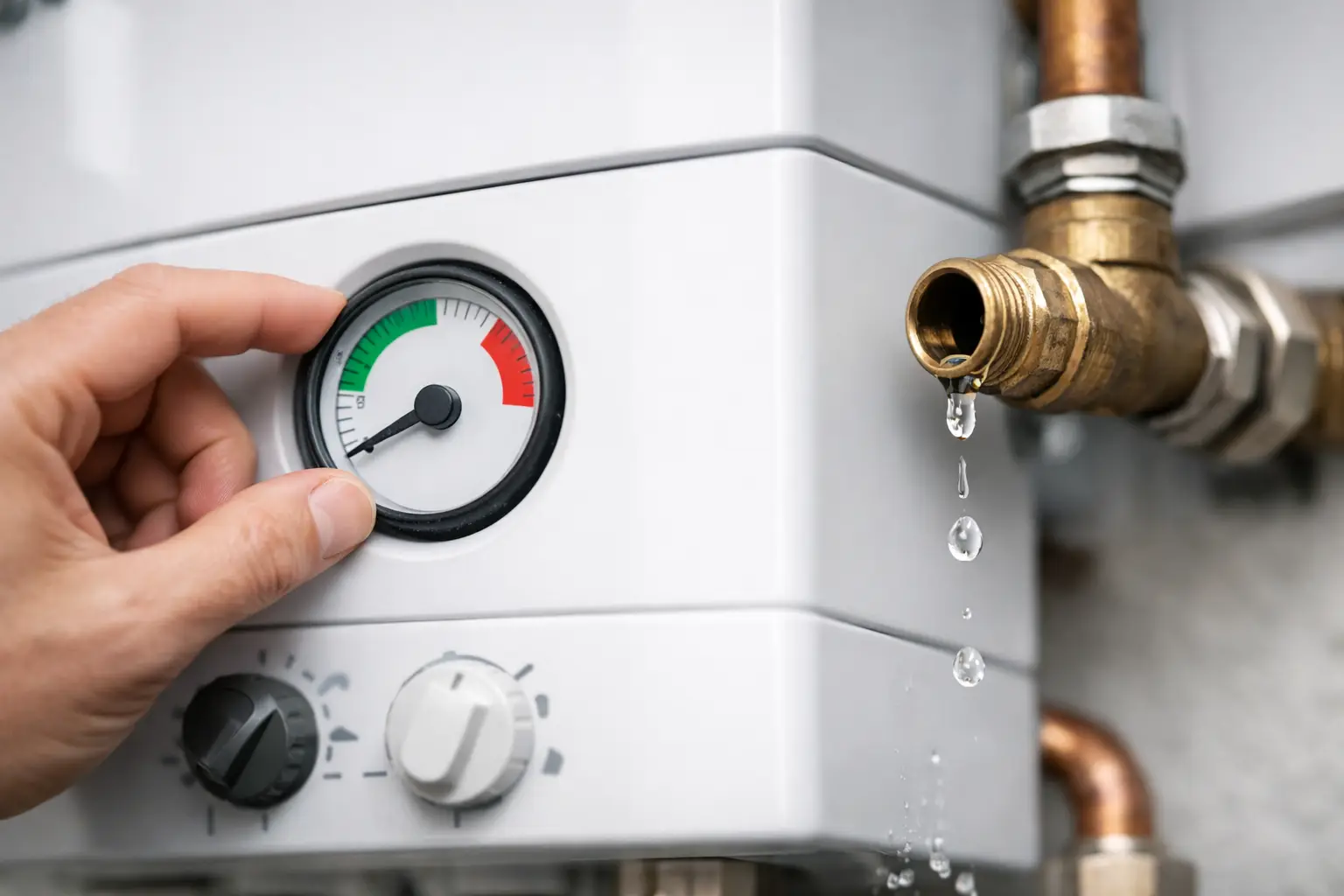
A boiler pressure gauge that drops once may simply need topping up. But a boiler losing pressure repeatedly is telling you that water, or the system’s ability to manage pressure, is being lost somewhere. Repressurising it may bring your heating back temporarily, but it will not resolve the underlying fault.
For households in Maidstone and across Kent, this can be especially frustrating when it means unreliable hot water, radiators that will not warm up properly, or a boiler that keeps locking out. The good news is that most pressure problems can be identified and repaired by a qualified heating engineer before they turn into a larger disruption.
What boiler pressure should be
Most sealed central-heating systems run at around 1 to 1.5 bar when cold. Once the heating is running, the pressure will usually rise a little as the water warms and expands. The exact range depends on your boiler, so its manufacturer instructions should always take priority.
If the gauge falls below the minimum marked range, the boiler may stop working to protect itself. You might see a low-pressure fault code, notice cold radiators, or find that hot water has become intermittent. Restoring pressure through the filling loop can be appropriate when it is done in line with the boiler instructions, but needing to do it frequently is not normal.
Why is my boiler losing pressure repeatedly?
The cause is often straightforward, although finding it is not always as simple as looking beneath the boiler. A small leak can evaporate on warm pipework or sit beneath floorboards, while an internal fault may leave no visible water at all.
A leak in the heating system
A leak is one of the most common reasons for persistent pressure loss. Check visible radiator valves, pipe joints and the area beneath the boiler for damp patches, staining, corrosion or droplets. Also look around radiator bleed points and beneath exposed pipes in cupboards.
However, no visible leak does not rule one out. Central-heating pipes may run under floors, behind walls or through concealed spaces. A slow leak can be difficult to spot, particularly in a busy family home where damp marks may be hidden by furniture or flooring.
It is tempting to keep adding water and carry on, but this can introduce fresh oxygen into the system. Over time, that encourages internal corrosion and sludge, which can affect radiators, pumps and the boiler itself. A recurring leak deserves a proper diagnosis rather than repeated top-ups.
A faulty pressure relief valve
The pressure relief valve is a safety component. It releases water if the boiler pressure becomes too high, preventing damage to the system. When it opens, water is normally discharged through a small copper pipe that leads outside.
If this valve is passing water or not resealing correctly, the boiler may steadily lose pressure. A useful observation is whether the external discharge pipe is wet or dripping, particularly after the heating has been on. Do not block or alter this pipe. Let an engineer inspect the valve and establish why it has discharged.
An issue with the expansion vessel
An expansion vessel allows heated system water to expand without causing an excessive rise in pressure. If the vessel has lost its air charge or its internal diaphragm has failed, pressure can climb sharply when the heating is on and then fall low again as the system cools.
This pattern is a strong clue: the gauge may look acceptable when cold, rise towards the red zone during use, and then drop enough to require repressurising later. In some cases, the pressure relief valve will release water as the pressure rises, leaving the system low once it cools. This is a job for a Gas Safe registered engineer, who can test the vessel and related components safely.
A leaking automatic air vent or internal boiler component
Modern boilers contain several small valves and connections. An automatic air vent may seep, or an internal seal, pump connection or heat exchanger may develop a fault. Because these components sit inside the boiler casing, they should not be investigated by a homeowner.
Removing the boiler case can compromise safety and may expose gas-carrying parts or electrical components. A qualified engineer can inspect the appliance correctly, identify the source of the fault and advise whether a repair is practical for the age and condition of your boiler.
Recent radiator bleeding or system work
Pressure can fall after radiators have been bled because air has been released from the system. It may also need correcting after plumbing work, a new radiator installation or a repair to the heating circuit. In these situations, one careful top-up may be all that is needed.
If pressure continues to drop days or weeks later, treat it as a separate problem. The system may have a leak, or it may not have been fully checked after the work was completed.
Safe checks you can make at home
Before arranging a visit, it helps to make a few simple observations. Note the pressure when the boiler is cold, then check it again after the heating has been running. If it rises significantly when hot, mention this to your engineer.
You can also inspect visible radiators and pipework for signs of water, and look at the external pressure relief discharge pipe without touching it. Record any boiler fault code and whether the loss of pressure happens overnight, only when the heating is on, or after topping up.
Do not repeatedly turn valves, dismantle the boiler casing, or add leak-sealing products without professional advice. Those actions can obscure the real fault or create further problems. If you are unsure how to use your filling loop, it is better to ask for help than risk over-pressurising the system.
When to call a heating engineer
Arrange a professional inspection if you need to repressurise more than occasionally, the pressure drops quickly, or you can see water around the boiler, radiators or pipework. You should also seek help where pressure rises unusually high when the heating is on, the boiler displays recurring fault codes, or hot water and heating are unreliable.
If you smell gas, suspect a gas leak, or feel unwell with symptoms that could indicate carbon monoxide exposure, switch off the appliance if it is safe to do so, leave the property and seek urgent appropriate assistance. Pressure loss itself is usually a water-side issue, but any concern involving gas safety needs immediate attention.
A Gas Safe registered engineer will assess the full system rather than simply refill it. That may include checking the boiler’s internal components, testing the expansion vessel, examining the pressure relief valve, inspecting radiators and visible pipework, and considering whether a concealed leak needs further investigation. The right repair depends on what has failed, the boiler model and the wider condition of the heating system.
A lasting repair protects your heating system
A pressure issue is not always expensive or complicated. A worn valve, a loose radiator connection or an expansion vessel that needs attention can often be resolved without major work. Equally, a repeated fault in an older boiler may be a sign that repair costs are beginning to outweigh the benefits, especially if efficiency and reliability have already declined.
An experienced engineer should explain the findings in plain English and set out the sensible options. For some homes, that will mean a targeted repair and a follow-up pressure check. For others, it may mean planning maintenance, improving system water quality, or discussing a replacement boiler when the time is right.
Regular boiler servicing gives small issues a better chance of being found early. It is also an opportunity to check safe operation, keep the appliance working efficiently and reduce the risk of losing heating at an inconvenient time. Dacey Heating Engineers provides friendly, transparent support for homeowners who want a clear answer and a dependable repair.
Your boiler should not need constant attention just to keep your home warm. If the pressure keeps falling, a timely professional check can restore the reliable heating and hot water your household depends on.

