

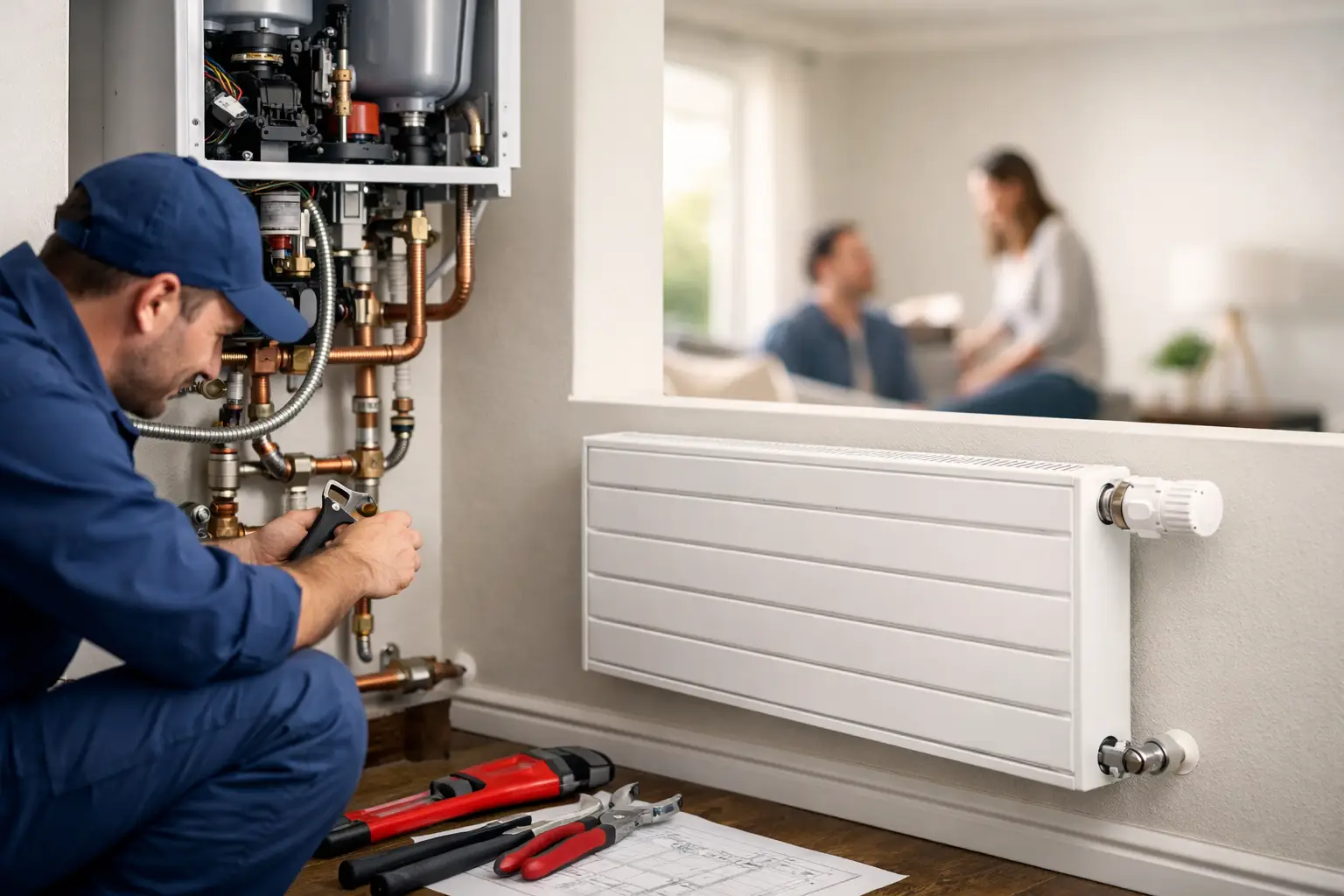
A cold bedroom, unreliable hot water or radiators that only warm at the top are more than everyday irritations. They can be signs that a heating system is no longer suited to your home. Knowing how to install central heating starts with understanding that this is not simply a case of fitting a new boiler and adding radiators. A well-planned system should provide dependable warmth, safe hot water and sensible running costs for years to come.
For homeowners in Maidstone and across Kent, the right approach is a professional survey followed by a system design that reflects the property, the household and the way you use each room. Gas work must always be completed by a Gas Safe registered engineer. This protects your household and ensures the installation is commissioned, documented and registered correctly.
Start with a proper home heating survey
Every successful central heating installation begins with the home itself. A qualified engineer will assess the property’s size, layout, insulation, existing pipework and hot water requirements. They will also ask practical questions: How many people live in the house? Which rooms feel cold? Is there one bathroom or several? Are you planning an extension, loft conversion or renovation in the near future?
This survey is where a tailored system begins. A small, well-insulated home with one bathroom may suit a combi boiler, which provides heating and hot water from one compact unit. A larger property with multiple bathrooms may be better served by a system boiler and hot water cylinder, allowing more than one tap or shower to be used with stronger, more consistent flow.
Boiler size is not a bigger-is-better decision. An oversized boiler can cycle on and off too often, while an undersized model may struggle to keep up when demand is high. The aim is to select equipment that meets the home’s real requirements efficiently.
Choose the central heating system that suits your home
Most modern domestic systems use a gas boiler to heat water, which is then circulated through radiators or underfloor heating by a pump. The boiler may also provide domestic hot water directly or store it in a cylinder, depending on the design.
A combi boiler is often an excellent choice where space is limited and hot water demand is modest. There is no separate cylinder, so it can free up an airing cupboard. However, a combi boiler has limits when several outlets require hot water at once. If one person is showering while another runs a bath, flow rates may be reduced.
A system boiler works with an unvented hot water cylinder. It needs more room but can be a practical option for busy family homes, particularly those with more than one bathroom. Conventional boilers, which use both a cylinder and a cold-water storage tank, are still found in many older properties. Whether they should be replaced depends on the existing system, available space and your future needs.
Your engineer should explain the options in plain English, including the likely installation work, running costs and any changes needed to pipework or water supplies. A clear quotation should set out what is included, rather than leaving you to guess.
Plan radiator sizes, positions and controls
Radiators are not selected by appearance alone. Each room needs a heat-loss calculation to establish the output required to keep it comfortable. This calculation considers room dimensions, outside walls, windows, insulation and the room’s intended use. A north-facing lounge with large glazing needs a different radiator output from a small internal bathroom.
The position matters too. Radiators are often placed beneath windows because this helps counter cold air falling from the glass, although modern insulation and room layouts can create alternatives. Furniture should not obstruct the heat, and pipe routes should be planned carefully to avoid unnecessary disruption to floors, walls and finishes.
Good controls make a substantial difference to comfort and efficiency. A programmable thermostat lets you set heating times around your normal routine, while thermostatic radiator valves allow individual rooms to be adjusted. Smart controls can offer added convenience, but they are only worthwhile if they are easy for the household to use. The best system is one that keeps you comfortable without heating empty rooms unnecessarily.
What happens during a central heating installation?
The precise schedule depends on whether you are replacing an existing system or installing heating in a property that has none. A like-for-like boiler replacement may be completed quickly, while a full installation involving new pipework, radiators and a cylinder requires more planning.
Before work starts, a professional installer should confirm the proposed layout, equipment and access arrangements. They should explain where water or gas supplies may need to be isolated, how long the heating may be unavailable and what steps will be taken to protect your home. This preparation is especially valuable in occupied homes, where keeping disruption to a minimum matters.
The installation itself commonly involves removing old equipment where required, fitting the boiler and flue, running or adapting pipework, installing radiators and connecting controls. Condensing boilers produce wastewater, known as condensate, which needs a correctly designed discharge route. The flue also requires careful positioning and safe clearances. These are technical details that should never be treated as an afterthought.
If new electrical connections are needed for controls, pumps or the boiler supply, they must also be completed safely and in line with the relevant requirements. Your installer will consider the practical condition of the existing system rather than assuming every old component can be reused.
Cleaning and protecting the system
New boilers work best with clean water circulating through the system. Where old radiators and pipework are being retained, sludge and debris can reduce efficiency, cause cold spots and place extra strain on components. An engineer may recommend a chemical clean or powerflush, depending on the system’s condition.
A magnetic filter is often fitted to collect circulating metallic debris before it reaches sensitive boiler parts. Inhibitor is then added to the system water to help prevent corrosion. These measures are not glamorous, but they are part of protecting the investment you are making in your heating.
There are trade-offs. A powerflush is not automatically required for every installation, and it may not be the right solution for badly corroded or fragile pipework. A reliable engineer will assess the system and explain the reason for any recommended work rather than treating it as an automatic extra.
Commissioning is where safety and performance are confirmed
Fitting the equipment is not the final step. Once the system is complete, it must be filled, tested and commissioned. The engineer checks for leaks, confirms safe gas operation, tests the flue, balances radiators and makes sure the controls respond correctly.
Radiator balancing is particularly worthwhile. It adjusts the flow through each radiator so that heat is distributed evenly around the home. Without it, rooms close to the boiler can become too warm while those further away take much longer to heat up.
Your Gas Safe registered engineer should also provide the appropriate paperwork, explain how to use the controls and leave you with the manufacturer’s instructions and warranty information. Where required, the installation should be notified through the correct route for Building Regulations compliance. Do not be afraid to ask questions at this stage. Understanding pressure readings, timer settings and basic warning signs can help you get the best from the system.
Keep your new heating system working well
A new central heating system should be maintained, not forgotten. An annual boiler service helps identify wear, check safe operation and keep the warranty conditions on track. Between services, watch for changes such as dropping boiler pressure, unusual noises, cold patches on radiators or inconsistent hot water.
Bleeding a radiator may resolve trapped air, but repeated pressure loss or frequent cold spots need professional attention. Small symptoms can become larger repairs if they are ignored through another winter.
For a full installation, the most reassuring choice is an engineer who takes time to survey the property, explains the options clearly and remains available after the work is complete. Dacey Heating Engineers brings more than 25 years of hands-on experience to homes across Maidstone and Kent, with a focus on safe workmanship, clear advice and lasting household comfort.
The right central heating system should fade into the background of daily life: warm rooms when you need them, reliable hot water when you turn on the tap, and the confidence that your home has been cared for properly.

