

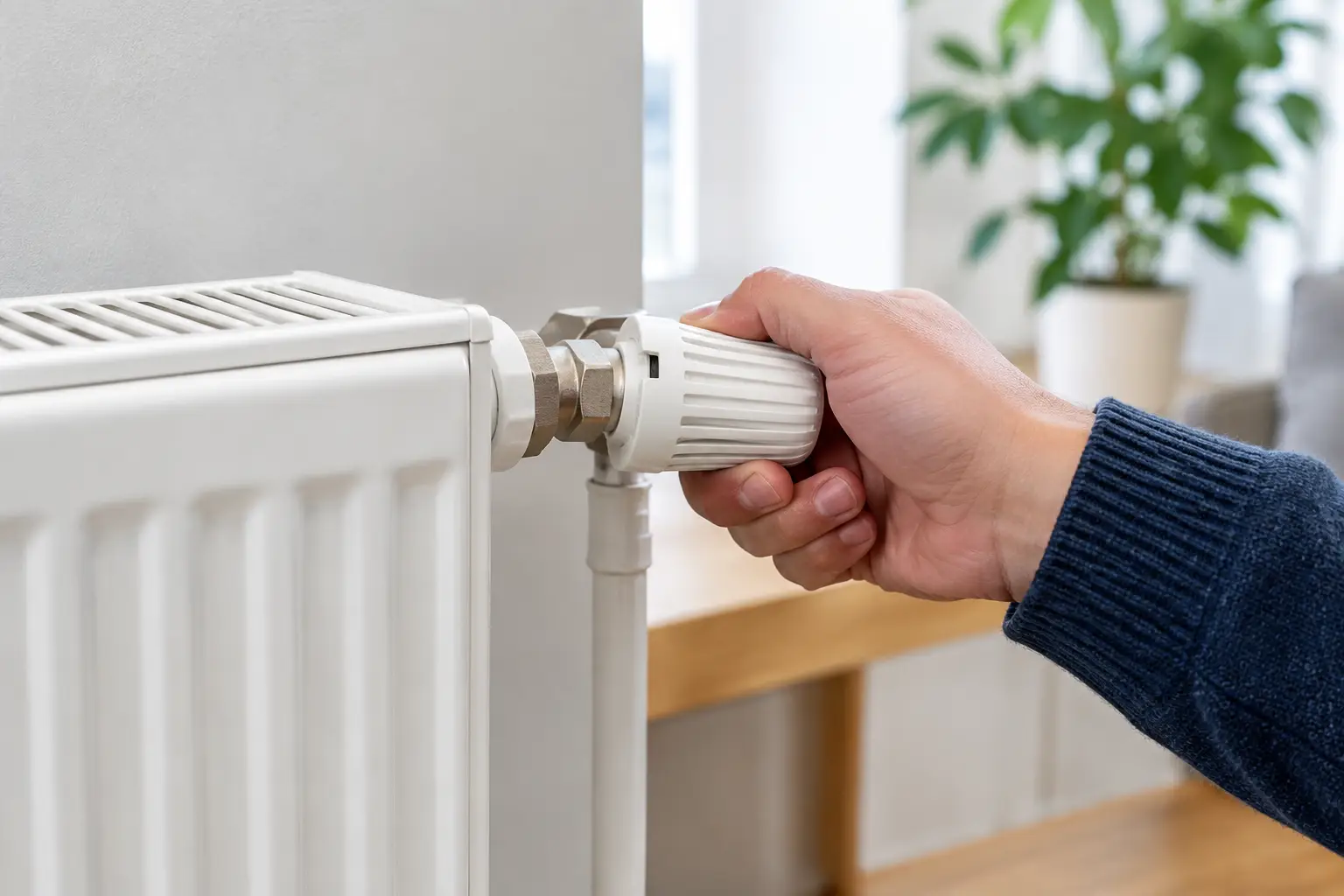
A radiator that stays cold while the rest of the house warms up can be frustrating, particularly when the heating is working and you need a comfortable home. A radiator valve stuck in the closed position is a common cause, especially after the heating has been off through summer. The good news is that some simple checks can identify the issue. The important part is knowing when to stop and call a qualified heating engineer.
What a stuck radiator valve usually means
Most radiators have two valves. The valve with numbered settings is usually the thermostatic radiator valve, often called a TRV. It senses the room temperature and adjusts the flow of hot water into the radiator. The valve at the opposite end is commonly a lockshield valve, which helps balance the heating system.
When homeowners say a radiator valve is stuck, they usually mean the TRV is no longer allowing water into the radiator. The valve head may turn normally, but the small metal pin beneath it can become seized in the down position. If this happens, the radiator may remain cold or only warm slightly at the bottom.
A stuck valve is not the only possible explanation. Air in the radiator, low system pressure, poor system balance, sludge, a faulty circulation pump or a wider boiler fault can all affect heating performance. That is why it is worth checking the full picture before assuming the valve is the sole problem.
Signs your radiator valve may be stuck
A valve fault is more likely if one radiator is cold but others are heating as expected. You may find that turning the TRV from low to high makes no difference, even when the heating is on and the room is cool.
Feel the pipework carefully, avoiding any very hot surfaces. If the pipe entering the radiator is hot but the radiator itself remains cold, water may not be flowing through it properly. If both pipes are cold, the problem could be elsewhere in the system, such as the boiler controls, system pressure or circulation.
It also helps to compare the radiator with others nearby. If several radiators are underperforming, or your hot water is unreliable too, treat it as a central heating issue rather than an isolated valve problem.
Safe checks to make before calling for help
Start by turning the heating on and setting the affected TRV to its highest number. Give the system time to warm up. Central heating does not respond instantly, particularly in a larger home or when the system has been off for a while.
Next, check that the lockshield valve at the other end of the radiator has not been closed accidentally. It usually has a plain cap rather than a numbered control. Do not make large adjustments to it, as changing the lockshield setting can upset the balance of the whole system. If it appears fully closed, take a photo or note its position before moving it slightly.
If the radiator is cold at the top and warmer at the bottom, trapped air is more likely than a stuck valve. Bleeding may help, but only do this when the heating is switched off and the radiator is cool enough to work around safely. Keep a cloth and suitable container ready, and check the boiler pressure afterwards if you have a sealed system.
If only the bottom of the radiator is cold, while the top is warm, sludge or debris inside the radiator may be restricting water flow. Bleeding will not solve that problem. A professional assessment can establish whether cleaning, balancing or more extensive system treatment is needed.
How to check a thermostatic valve pin
If the basic checks point to the TRV, you may be able to inspect the pin beneath the valve head. First, turn the heating off and allow the radiator to cool. The valve head can usually be released by loosening its retaining ring or clip. This varies by make, so avoid forcing any part that does not move easily.
With the head removed, you should see a small metal pin in the valve body. It should move up and down slightly under gentle pressure and spring back when released. A pin that is firmly down or does not return may be stuck.
Do not use grips, pliers or excessive force on the pin. It can be bent, damaged or pushed too far into the valve, turning a straightforward fault into a leak or a valve replacement. Avoid loosening the valve body itself, as this can allow heating water to escape.
A light, careful press and release may free a mildly seized pin. If it does not move freely after a few gentle attempts, stop there. A heating engineer can free or replace the valve safely, check the radiator’s operation and make sure no underlying system issue has been missed.
When not to tackle a stuck radiator valve yourself
Water around a radiator valve should always be taken seriously. A small amount of moisture may be condensation, but a persistent drip, staining around the valve, damp carpet or a drop in boiler pressure could indicate a leak. Do not keep tightening fittings at random. Switch off the heating if necessary and arrange professional help.
You should also call an engineer if the radiator valve is corroded, the valve head is cracked, the system repeatedly loses pressure or several radiators are cold. These symptoms can point to a problem beyond one valve.
For homes with a boiler fault code, unusual boiler noises, no heating and no hot water, or any concern about a gas appliance, avoid attempting repairs. A Gas Safe-registered engineer should investigate. Heating systems contain hot water, pressurised components and controls that need to work together correctly for safe, reliable comfort.
Preventing valves from sticking again
Radiator valves often seize because they have not moved for months. At the end of the heating season, it can help to turn TRVs through their range and return them to the preferred setting. Before colder weather arrives, run the heating briefly and check each radiator warms evenly.
Annual boiler servicing is also a sensible opportunity to discuss cold spots, noisy pipework, pressure changes or radiators that take too long to heat. Small issues are usually easier to resolve before the household depends on the heating every day.
If a radiator regularly stays colder than the rest, the answer may not be a new valve alone. The system may need balancing so hot water is shared more evenly, or it may benefit from cleaning if internal debris has built up. A tailored assessment avoids paying for work that does not address the actual cause.
Local support for cold radiator problems
A cold radiator should not mean accepting an uncomfortable room or turning the thermostat higher to compensate. Dacey Heating Engineers can assess stuck valves, poor radiator performance and wider central heating faults for homeowners in Maidstone and the surrounding Kent area. With more than 25 years of hands-on experience, our approach is straightforward: identify the cause, explain the options clearly and carry out the right repair with as little disruption as possible.
If your radiator valve is stuck, a few careful checks may provide an answer. But when the pin will not move, water is present or the problem affects more than one radiator, prompt professional attention is the safest route back to a warm, dependable home.

