

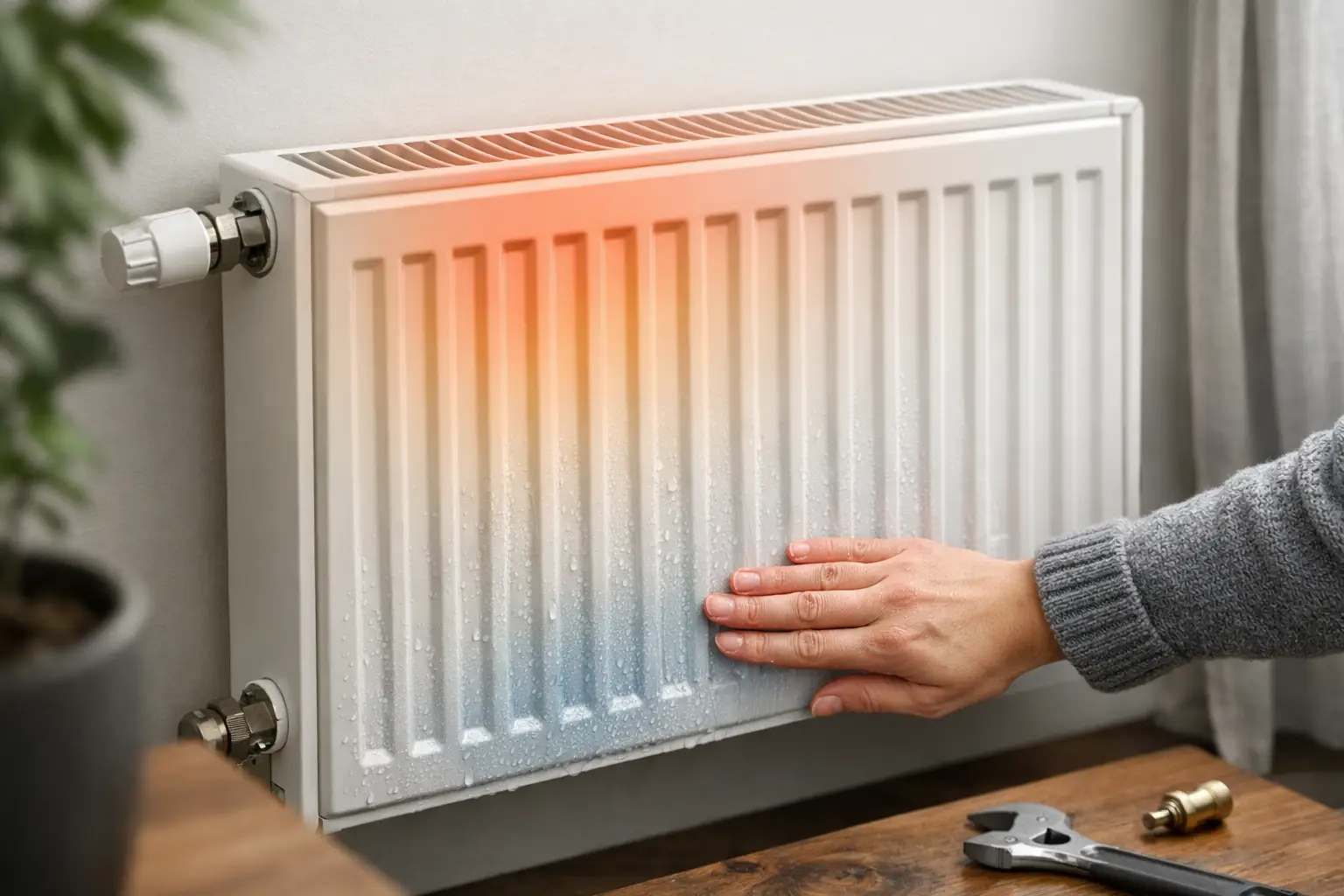
A radiator that is warm across the top but noticeably cooler along the bottom is not just frustrating on a cold Kent morning. When radiators cold at bottom become a regular problem, they can make rooms slower to heat, put extra demand on your boiler and leave you paying for warmth that is not reaching the room properly.
The usual cause is a build-up of sludge inside the heating system. This is common in older systems, but it can affect any central-heating system that has not been properly cleaned, protected or maintained. The good news is that the problem is often repairable. The right solution depends on how widespread the issue is and what is happening elsewhere in your system.
Why are radiators cold at the bottom?
Central-heating water contains small amounts of debris over time. Inside radiators and pipework, a chemical reaction can create magnetite – a dark, iron-based sludge. As it circulates, this material settles in low-flow areas, particularly at the bottom of radiators.
That layer of sludge prevents hot water from reaching the lower part of the radiator. The radiator may still feel hot at the top, so it can appear to be working, but it is delivering less heat than it should. In some homes, only one radiator is affected. In others, several radiators are cool at the bottom, which usually suggests a wider system issue.
This is different from a radiator that is cold at the top. A cold top section is more commonly caused by trapped air and may be resolved by bleeding the radiator. Sludge sits lower down, so bleeding alone will not remove it.
Signs that sludge may be affecting your heating
A cold lower section is the clearest sign, but it is worth looking for other clues. Your heating may take longer to warm the house, some rooms may never feel quite comfortable, or you may hear banging, gurgling or whistling from the boiler or radiators. Dirty water when a radiator is drained is another indication that the system needs attention.
You may also find that the boiler is cycling on and off more often than expected. That does not automatically mean sludge is the cause, but restricted circulation can make it harder for the system to transfer heat efficiently.
If your boiler has displayed a fault code, lost pressure repeatedly or you have noticed a leak, arrange a professional assessment rather than assuming it is simply a radiator issue. A heating system is made up of connected parts, and a reliable diagnosis looks at the full picture.
Safe checks you can make at home
Before arranging repair work, there are a few simple observations that can help identify the problem. Turn the heating on and allow the system time to warm up. Carefully feel the radiator surface, avoiding any exposed pipework that may be very hot. If the top is warm and the bottom remains cold, sludge is a likely cause.
Check whether the radiator valve is open and that the thermostatic radiator valve has not been turned down or stuck. A valve problem can stop the whole radiator heating, rather than only leaving its bottom section cold. If you have a thermostatic valve, remove the decorative valve head only if you are confident doing so and do not force any internal pin or component.
You can also compare affected radiators with those working normally. One cold radiator may need a local repair or flush. Several affected radiators point more strongly towards debris throughout the heating circuit.
Avoid repeatedly bleeding a radiator that is cold at the bottom. It is unlikely to clear sludge and, on a sealed system, bleeding can reduce the system pressure. If you do bleed a radiator because the top is cold, check the boiler pressure afterwards and follow your boiler manufacturer’s guidance for repressurising if needed.
The right repair depends on the condition of the system
A single-radiator flush
Where one radiator is affected and the rest of the heating system performs well, removing and flushing that radiator may be a sensible option. The radiator is taken down, cleaned through and refitted, with the system refilled and checked afterwards.
This can improve heat output quickly, but it will not solve a wider sludge problem in pipework, the boiler or other radiators. A good engineer will explain whether a local repair is likely to offer a lasting result before work begins.
A system clean or power flush
If multiple radiators are cold at the bottom, a more thorough central-heating clean may be recommended. A professional power flush uses specialist equipment and cleaning chemicals to circulate water through the system and dislodge accumulated debris. The system is then flushed through until it is suitably clean.
A power flush is not a one-size-fits-all answer. The age and condition of the system matter. In a very old system with weak components, an engineer should assess the risks carefully and discuss the best approach with you. The aim is not to sell unnecessary work, but to restore dependable circulation while protecting your home and heating system.
Chemical inhibitor and ongoing protection
Once a radiator or system has been cleaned, adding the correct inhibitor is an important final step. This treatment helps slow corrosion and reduces the chance of sludge forming again. A magnetic filter, fitted to suitable systems, can also collect magnetic debris before it reaches sensitive boiler components.
Neither measure replaces regular maintenance, but together they can make a meaningful difference to the long-term health of your central heating.
Why leaving sludge untreated can cost more
A partly blocked radiator has to work harder to heat a room, and the thermostat may keep calling for heat for longer. That can increase energy use without improving comfort. More significantly, debris can travel around the system and affect the pump, valves and heat exchanger inside the boiler.
Modern boilers are efficient pieces of equipment, but they rely on clean water circulating properly. Restricted flow may contribute to overheating, noises, fault codes and premature wear. Addressing radiators that are cold at the bottom early can therefore help protect a much more expensive part of the system.
There is also the everyday impact. Bedrooms, lounges and home offices should heat evenly, especially during winter. A family should not have to keep turning the thermostat up simply because the radiators are not delivering their full output.
When to call a heating engineer
If the problem affects more than one radiator, returns after a previous repair, or comes with boiler faults or repeated pressure loss, it is time for a professional inspection. An experienced heating engineer can check circulation, radiator valves, system water quality, boiler operation and the condition of any existing filter.
For homes in Maidstone and the surrounding Kent area, Dacey Heating Engineers can assess the cause clearly and recommend work that suits the system rather than applying a standard fix. With more than 25 years of hands-on experience, the focus is on restoring reliable warmth with as little disruption to your household as possible.
It is particularly wise to seek help before winter if your radiators have been underperforming. Repair work is easier to plan when your heating is not needed all day, and early attention can prevent a small circulation issue from becoming a no-heating problem when temperatures drop.
Keeping radiators working efficiently
Annual boiler servicing is a sensible opportunity to discuss uneven heating, unusual noises or radiators that take too long to warm up. A service helps identify issues before they become disruptive, although cleaning work may require a separate visit depending on what is found.
Try not to cover radiators with large furniture or heavy curtains, as this can trap heat in the wrong place and make a healthy radiator seem ineffective. Keep an eye on boiler pressure, only bleed radiators when there are signs of trapped air, and ask whether your system has adequate inhibitor protection after any draining or repair work.
A warm radiator should feel consistently warm from top to bottom once the heating has settled. If yours does not, it is worth acting on the warning sign. A properly cleaned, balanced and protected system gives your household the comfort it should have – steady warmth when you need it most.

