

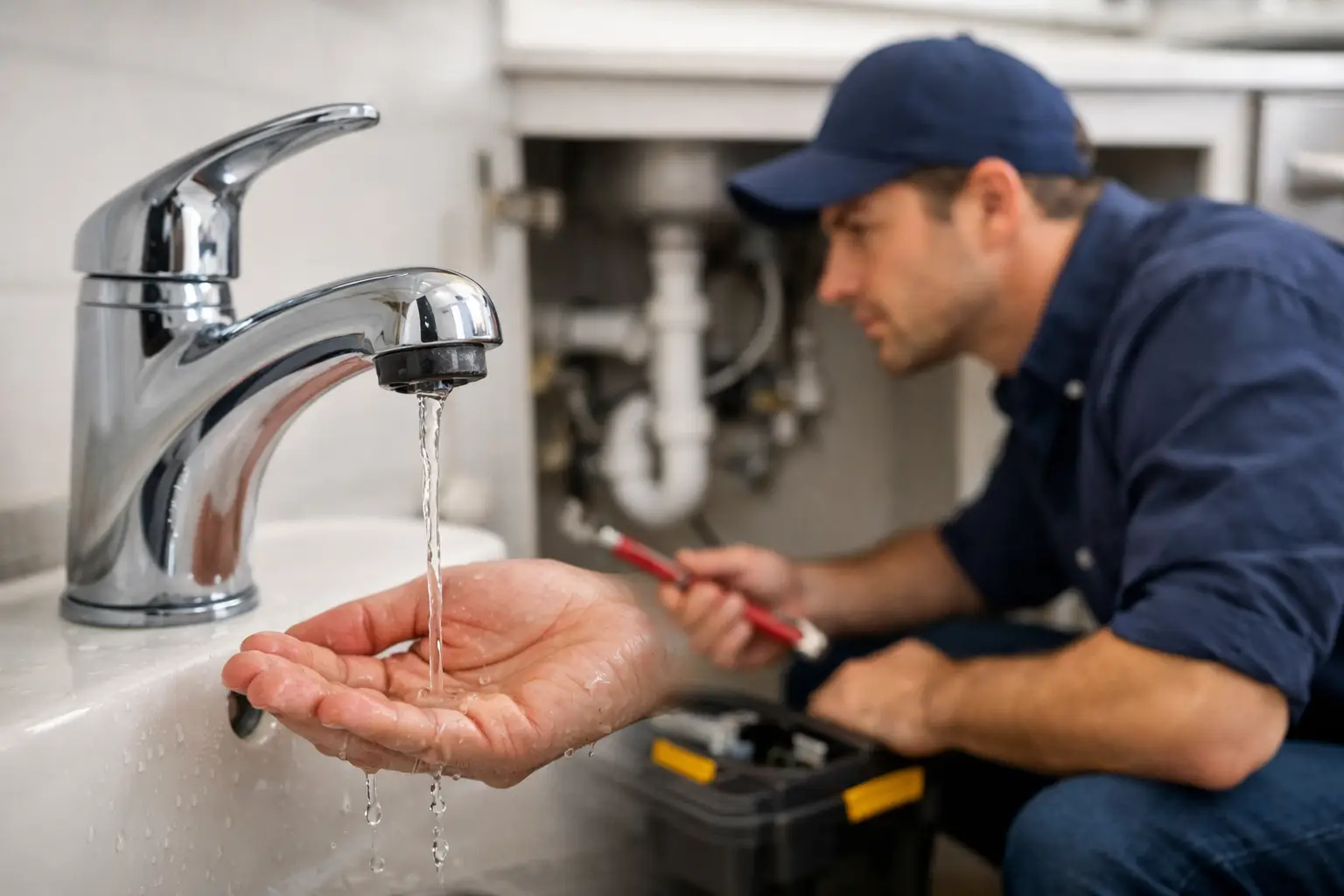
The shower drops to a trickle just as someone turns on the kitchen tap. The washing-up takes longer, the bath fills slowly, and a normally simple morning routine becomes frustrating. Low water pressure in the house is a common problem, but the cause is not always where homeowners expect. It may be a simple setting, a local supply issue or a plumbing fault that needs professional attention.
The useful first step is to work out whether the problem affects every outlet or only one. That small detail can save time, avoid unnecessary disruption and help identify the right repair.
Is the low water pressure in the house everywhere?
Try the cold and hot taps in the kitchen, bathroom and any utility room. Then run the shower and flush a toilet, one at a time. Take note of whether the pressure is poor throughout the property, only upstairs, only at one tap, or only on the hot water supply.
If one tap or shower has weak flow while the rest of the house is normal, the issue is often local to that fitting. A blocked tap aerator, scaled shower head, worn cartridge or partly closed isolation valve can all reduce flow. These are usually straightforward plumbing repairs.
If every cold tap is weak, the cause may be at the mains supply, the internal stopcock, a pressure-reducing valve or the pipework serving the house. If cold water is fine but hot water is weak, attention should turn to the boiler, hot water cylinder or the pipework and valves on the hot water side.
It is worth remembering that water pressure and water flow are related but different. Pressure is the force pushing water through the pipes. Flow is the volume of water delivered. A restriction such as limescale can leave the incoming pressure unchanged while making the water from a tap feel disappointingly weak.
Simple checks you can make safely
A few careful observations can provide a clear picture before you arrange a visit. Do not dismantle pipework, remove boiler covers or alter unfamiliar valves. Water and gas systems need the right knowledge and equipment to be handled safely.
Check the following:
- Ask a nearby neighbour whether they have noticed a similar problem. If they have, the issue may be with the local water supply rather than your home.
- Check whether the internal stopcock is fully open. It is often found under the kitchen sink, in a utility cupboard or near where the mains pipe enters the property. Turn it gently only if you are confident it is the correct valve.
- Look for signs of a leak, such as damp patches, staining, a constantly moving water meter or the sound of water when no taps are in use.
- Remove and rinse a tap aerator or shower head if it is visibly scaled and you can do so safely. In hard-water areas of Kent, limescale is a frequent cause of reduced flow at individual outlets.
If pressure has fallen suddenly, particularly across the whole house, it is sensible to check for visible leaks and contact your water supplier to see whether there is a known supply issue. A burst or hidden leak can waste a considerable amount of water and cause damage if left unresolved.
Common causes of poor water pressure
A partly closed stopcock or valve
The main stopcock controls water entering the property. It can be knocked, turned down during previous work or become stiff with age. A valve that is only partly open creates a restriction for every cold outlet in the home.
Isolation valves beneath sinks, behind toilets and near appliances can similarly affect a single fitting. Older valves should be treated carefully, as forcing a seized valve can cause a leak. A plumber can check and replace worn valves with minimal disruption where needed.
Limescale and debris in taps or showers
Maidstone and much of Kent have hard water. Over time, mineral deposits can build up in shower heads, tap aerators and cartridges. Debris from pipework can also collect after water supply works or plumbing repairs.
When only one outlet is affected, cleaning or replacing the relevant component may restore a much stronger flow. If several fittings are affected, the problem is less likely to be a single blocked aerator and should be investigated more widely.
Leaking or ageing pipework
Older pipework can corrode internally, while hidden leaks can reduce the water reaching your taps. A leak may not always leave an obvious puddle. Unexplained damp, a higher water bill, low pressure that worsens over time or a water meter that continues to move are all reasons to arrange a professional inspection.
The repair depends on the location and condition of the pipework. A localised repair may be enough, but badly deteriorated sections may need replacing to provide a reliable long-term solution.
Problems with the boiler or hot water system
If the cold taps have good pressure but hot water does not, the boiler or hot water system may be restricting the flow. On a combi boiler, possible causes include a blocked filter, scaled heat exchanger, faulty diverter valve or an issue with the incoming supply to the appliance. These checks must be completed by a Gas Safe registered engineer.
Homes with a hot water cylinder or older gravity-fed system can have different limitations. Water stored in a loft tank relies on gravity, so the pressure can naturally be lower upstairs and at shower outlets. A suitable pump or system upgrade may improve performance, but only after the system has been assessed properly. The best option depends on the layout, available water supply and the condition of the existing installation.
A wider mains supply issue
Water pressure can vary at different times of day, particularly when demand is high. Planned works, a burst water main or a supply fault can also affect an area temporarily. If neighbours have the same issue, contact the water supplier first. If the supply is confirmed as normal, an experienced plumber can investigate the plumbing within your property.
When low pressure needs professional attention
Some situations should not be left to chance. Arrange help promptly if you can see a leak, suspect a burst pipe, notice damp spreading through walls or ceilings, or have no water at all. Turn off the internal stopcock if water is escaping and it is safe to reach it, then seek assistance.
You should also call a qualified engineer when poor pressure affects hot water from a boiler, when a boiler shows an error code, or when a pressure problem appears alongside unreliable heating. Never remove a boiler case or attempt to repair gas-related equipment yourself.
For persistent low pressure with no obvious cause, a proper diagnosis is more valuable than replacing fittings at random. A plumber can test flow and pressure, inspect valves, trace restrictions and identify whether the problem sits with the mains, internal pipework or the heating and hot water system.
Choosing the right solution for your home
There is no single fix for every property. Replacing a scaled shower head may be all that is required in one home. In another, a failed valve, hidden leak or ageing pipework may be the real cause. For properties with older heating systems, improving shower performance may require changes to the hot water arrangement rather than a simple shower replacement.
A good engineer will explain what has been found in plain English, set out the practical options and be clear about costs before work begins. That matters because a pressure-boosting pump, for example, can improve a gravity-fed system but is not the right answer for every plumbing layout. Fitting the wrong solution can create noise, wear and future maintenance problems.
For homeowners in Maidstone and the surrounding Kent area, Dacey Heating Engineers can assess both plumbing and hot water system issues, helping you understand the cause before recommending a tailored repair or improvement.
If your water has gradually become weaker, do not simply put up with it. A careful check now can protect your daily comfort, prevent avoidable water damage and help your home’s plumbing perform as it should.

