

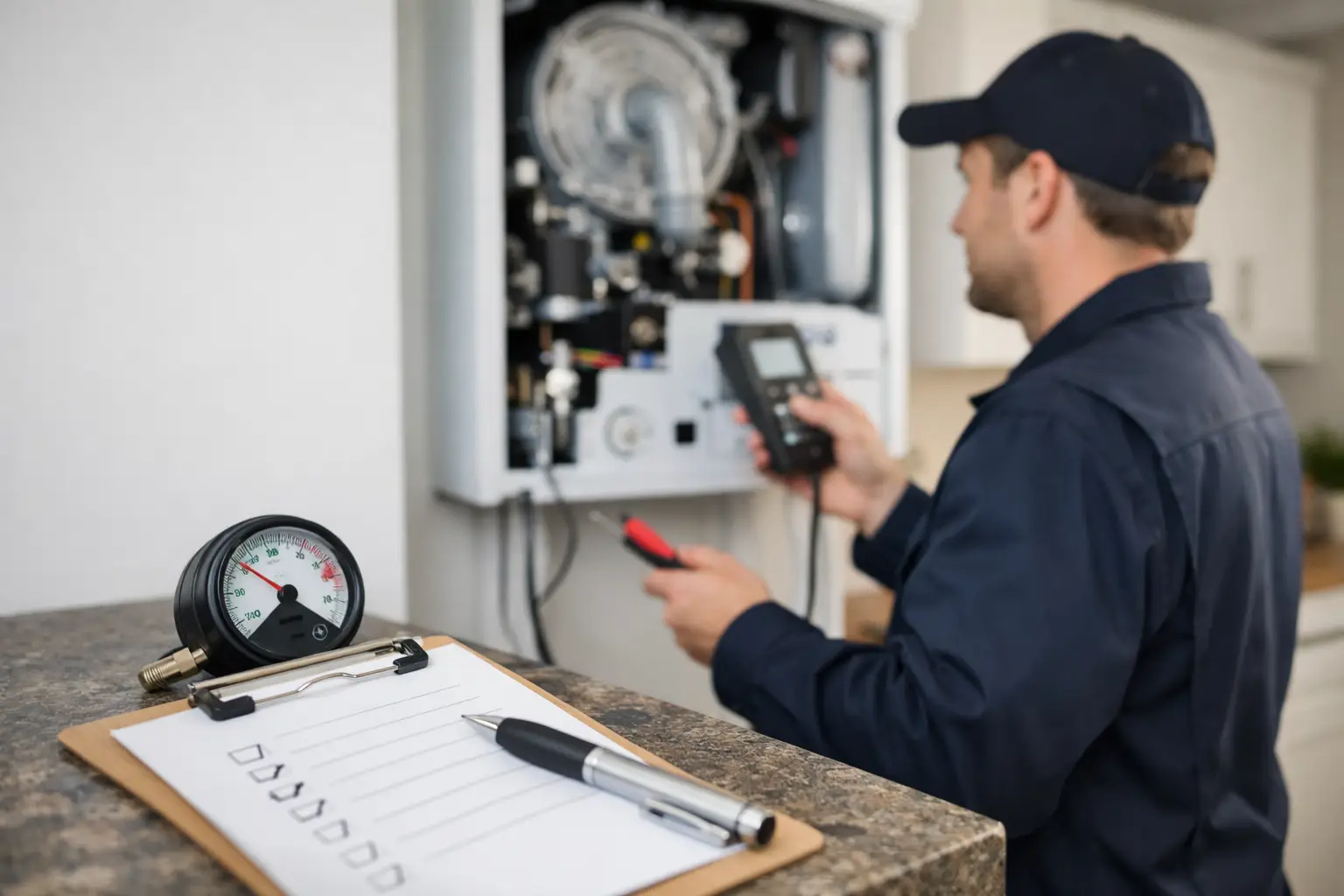
A boiler rarely chooses a convenient moment to stop working. It is usually on the first properly cold morning, just before guests arrive, or when everyone needs a hot shower. A yearly appointment is the sensible way to reduce that risk, and this boiler service checklist UK guide explains what a proper visit should involve, what you can do beforehand and when a fault needs attention sooner.
For households in Maidstone and across Kent, a boiler service is about more than keeping paperwork up to date. It is an opportunity to have a Gas Safe registered engineer check that your boiler is operating safely, efficiently and reliably, helping to protect the warmth and comfort of your home.
What a boiler service is – and is not
A boiler service is a planned inspection and maintenance visit carried out by a suitably qualified Gas Safe registered engineer. The engineer checks key safety controls, examines the appliance and its flue, assesses combustion, and looks for signs of wear, leakage or poor performance.
It is not the same as a repair. Your boiler may be working perfectly on the day, but a service can still identify an issue before it develops into a breakdown. Equally, an annual service cannot guarantee that no component will ever fail later in the year. Parts can wear unexpectedly, particularly in older boilers, but regular professional attention gives problems less chance to go unnoticed.
If your boiler is under a manufacturer warranty, annual servicing is commonly a condition of keeping that cover valid. Check the warranty terms for your particular model, as the requirements can differ.
Boiler service checklist UK: what your engineer should check
The exact process depends on the boiler type, its age and the manufacturer instructions. A modern condensing combi boiler will not be assessed in exactly the same way as an older heat-only system with a hot-water cylinder. However, a thorough service normally includes the following checks.
- Visual condition and installation: The engineer will inspect the boiler casing, controls, pipework and surrounding area for signs of damage, corrosion, water leaks or unsuitable alterations. They will also consider whether the ventilation and clearances around the boiler remain appropriate.
- Flue and ventilation: The flue carries combustion gases safely outside. The engineer checks that it is correctly fitted, in sound condition and unobstructed. Where applicable, they will also ensure required ventilation is present and clear.
- Gas safety and combustion: A Gas Safe engineer tests that the boiler is burning gas correctly and safely. This can include a flue-gas analyser test, along with checks to confirm the gas pressure and rate are suitable for the appliance.
- Internal components: With the boiler isolated safely, the engineer may inspect and clean relevant internal parts in line with the manufacturer guidance. This can include the burner, heat exchanger, fan, ignition components and condensate trap. Not every part is stripped down at every service, but any work should be based on the appliance instructions and its condition.
- Water pressure and heating performance: The engineer will check the system pressure, look for evidence of leaks and make sure the boiler responds properly to heating and hot-water demand. They may also assess radiators, controls, the expansion vessel or cylinder connections where these form part of the system.
- Safety devices and controls: A service should include checks on the boiler’s safety mechanisms and operating controls. Your thermostat, programmer and timer are worth reviewing too, because poorly set or unreliable controls can affect comfort and fuel use even when the boiler itself is sound.
At the end of the appointment, the engineer should explain what has been checked, flag any concerns in plain English and provide a service record. If a repair or further work is recommended, you should understand why it is needed, how urgent it is and what your options are before work goes ahead.
What to do before the engineer arrives
There is no need to prepare your boiler room like a workshop, but straightforward access makes a service safer and more efficient. Clear stored items, coats, cleaning products and household clutter away from the boiler and its controls. If the boiler is in a kitchen cupboard, make sure the engineer can open the doors fully and reach the appliance.
If you know of anything unusual, make a note of it. Intermittent loss of hot water, a radiator that stays cold, low pressure, odd noises or an error code can be easy to forget when the boiler happens to be behaving on the day. Let the engineer know how often it happens and when you first noticed it.
It also helps to have your boiler manual or previous service record available if you have them, especially for a newer appliance or a property you have recently moved into. Do not remove the boiler casing yourself or attempt to adjust gas components. Those checks are for a Gas Safe registered engineer.
When should you book a boiler service?
Most homeowners choose an annual service. Booking in late spring or summer can be practical because you are less dependent on central heating and appointment availability may be better than it is in the autumn rush. That said, any time of year is better than putting it off.
If your boiler has a warranty, use the installation or service date as your prompt and avoid leaving it until the last minute. Some households find it helpful to book the next service as soon as the current one is complete.
A service should be brought forward if you have concerns about safety or performance. A yellow or orange-looking flame, soot or staining around the boiler, repeated pressure loss, new banging noises, a smell of gas, or a carbon monoxide alarm sounding all need prompt attention. If you smell gas, turn off the gas supply only if it is safe to do so, avoid electrical switches and naked flames, ventilate the property, leave the area and contact the gas emergency service. Do not wait for a routine appointment.
Boiler servicing for landlords and homeowners
Homeowners are not generally under the same legal annual gas-safety obligation as landlords, but an annual service remains a sensible part of looking after the property. It supports safe operation, can help maintain warranty cover and may spot efficiency issues early.
For rented homes, landlords have specific gas-safety responsibilities and need a valid Gas Safety Record from a Gas Safe registered engineer at least every 12 months. This is distinct from a standard boiler service, although both may be completed during the same visit where appropriate. Landlords should make sure they receive the correct documentation and provide it to tenants within the required timeframe.
Small signs your heating system may need more than a service
A boiler service focuses on the appliance, but the wider heating system also affects how well your home warms up. Cold patches on radiators, noisy pipework, dirty system water, uneven temperatures between rooms and a boiler that cycles on and off frequently can point to circulation, balancing, control or system-cleanliness issues.
The right solution depends on the cause. A simple thermostat adjustment may be enough in one home, while another may benefit from radiator balancing, a magnetic filter check, a powerflush or a repair to a leaking component. A good engineer will assess the system rather than recommending work by default.
Choosing the right engineer for the job
Always check that the person working on your gas boiler is registered with Gas Safe and qualified for the type of appliance they are servicing. Ask what the visit includes, whether you will receive a service record and how any faults will be explained and priced.
For local homeowners, a family-run company can offer the reassurance of direct accountability as well as technical expertise. At Dacey Heating Engineers, our approach is to assess the boiler and the household’s needs carefully, explain findings clearly and carry out work with as little disruption as possible. Your comfort and confidence in the work matter just as much as the boiler itself.
A well-timed service does not have to be complicated. Keep the boiler accessible, choose a qualified engineer and act early on changes in performance. That simple routine gives your heating the best chance of being ready when Kent weather turns cold.

