

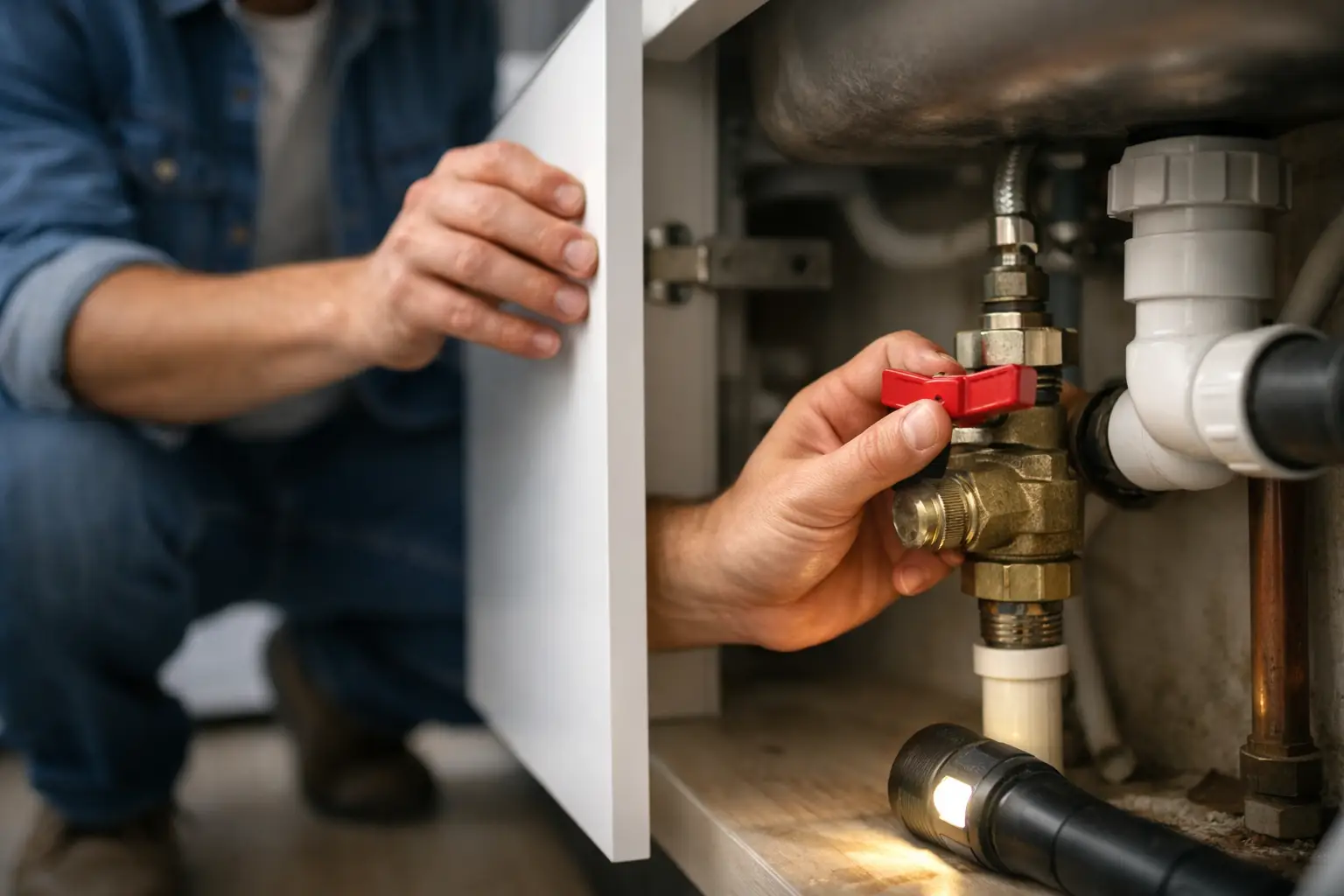
A burst pipe rarely gives much warning. Water may be spreading beneath a kitchen unit, appearing through a ceiling or running across the floor before you have had time to think. Knowing how to locate a stopcock valve before an emergency gives you a simple way to stop the incoming water and limit damage while professional help is arranged.
The stopcock is a small but vital part of your home’s plumbing. Every homeowner should know where it is, whether it still turns freely and who in the household can operate it. A few calm minutes spent checking now can save considerable disruption later.
What a stopcock valve does
Your internal stopcock controls the mains cold-water supply entering your property. Turned clockwise, it closes the valve and stops fresh water flowing to cold taps, toilets and most appliances connected to the mains supply. Turned anti-clockwise, it opens again.
It will not drain the water already sitting in pipes, and it may not affect every part of a more complex plumbing system immediately. For example, a hot-water cylinder, stored water tank or certain heating components can have their own valves. Even so, closing the stopcock is usually the first sensible action when there is a significant leak inside the home.
Do not confuse it with the valves beneath a sink, behind a washing machine or close to a boiler. These are often isolation valves that shut off one appliance or section of pipework. They are useful for smaller localised jobs, but they are not normally the main supply stopcock.
How to locate a stopcock valve room by room
In many Kent homes, the internal stopcock is close to where the mains water pipe enters the building. This is often at the front or side of the property, but layouts vary widely – especially in older houses, extended homes and converted properties.
Start in the kitchen. Look inside the cupboard under the sink, at the back of adjacent units and low down near the floor. It may be behind stored cleaning products, around pipework or accessed through a small hole in the back of a cabinet. A traditional stopcock often has a round tap-style handle, although newer versions may have a lever or a small wheel.
If it is not in the kitchen, check the utility room, downstairs cloakroom, hallway cupboard or airing cupboard. Some are found under the stairs, in a garage, near a boiler, or in a ground-floor bathroom. In flats, the valve may be inside a service cupboard, close to the water meter or near the front door.
Older properties can be less predictable. Previous renovations may have boxed in pipework, moved kitchens or left a stopcock behind an access panel. If you find a pipe entering through an external wall near ground level, follow it carefully where possible. The stopcock is commonly fitted shortly after that point.
Take a torch rather than relying on room lighting. Avoid forcing cupboard panels or removing fixed boxing if you are unsure what is behind it. A plumber can trace the incoming supply and advise on creating a safe, accessible access point if the valve has been hidden by later work.
Check outside only when necessary
Your property may also have an external stop valve, sometimes called a boundary stopcock. It is commonly located in a small chamber or cover near the boundary of the property, pavement or driveway. This valve may be needed if the internal stopcock is seized, leaking or cannot be found.
However, outside valves are not always straightforward to identify or operate. The chamber could serve more than one property, particularly in older terraces or flats, and the cover may be difficult to lift safely. If there is any doubt about which supply you are isolating, do not guess. Contact your water company for guidance or call a qualified plumber.
How to identify the correct valve
Once you think you have found the stopcock, look for a valve fitted directly onto a larger cold-water pipe. It may be brass or plastic, and it is often more substantial than the small isolation valves found on flexible appliance hoses.
The safest way to confirm it is during a planned check, not during a leak. Ask another adult to watch a cold tap while you turn the valve gently clockwise. The flow should reduce and then stop after a short time. Open the valve again by turning it anti-clockwise and check that normal water flow returns.
Do this slowly. A stopcock that has not moved for years can be stiff, and excessive force can damage the valve or pipework. If it resists, drips around the spindle or does not fully stop the water, leave it alone and arrange a repair. A working stopcock is essential household protection, not something to put off until it fails at the worst moment.
What to do if you have a leak now
If water is actively escaping, act quickly but carefully. First, keep clear of electrical fittings, sockets and appliances. If water is near electrics, do not touch anything wet and switch off the electricity at the consumer unit only if it is safe to do so.
Close the internal stopcock by turning it clockwise. Then open cold taps to release pressure and reduce the amount of water remaining in the pipes. Place towels, bowls or containers beneath the leak where practical, and move furniture or belongings away from the area.
If the leak is from a boiler or central-heating pipe, the main stopcock may not be the only valve involved because a heating system is a separate circuit. Turn off the boiler if safe, but do not remove its casing or attempt a repair. Water escaping from a boiler, cylinder or heating pipe calls for professional assessment, particularly where there is any concern about electrical safety or gas appliances.
A leaking toilet, washing-machine hose or kitchen pipe can still cause major damage, even if the flow initially looks small. Shut the supply off, avoid using the affected appliance and arrange a plumber as soon as possible.
Keep your stopcock easy to reach
After you have found it, make the location part of your household emergency plan. Do not pack the surrounding cupboard so tightly that the valve cannot be reached. A discreet label inside the cupboard can help family members, guests or a neighbour find it quickly if you are away.
It is sensible to check the valve once or twice a year, perhaps when arranging your boiler service or carrying out other routine home maintenance. Turn it gently enough to confirm it moves, then return it to the fully open position. Never leave it partly closed, as restricted flow can cause poor pressure at taps and appliances.
If the stopcock sits behind a washing machine, under fixed flooring or inside an inaccessible boxed section, having it moved or replaced can be worthwhile. The best position is not necessarily the one that looks neatest. It is the one you can reach immediately, without tools or moving heavy items.
When replacement is the better option
A seized, corroded or leaking stopcock should be repaired or replaced by an experienced plumber. Modern valves can be more reliable and easier to operate, but the right solution depends on the age and condition of the incoming pipework. Some older installations need careful handling to avoid disturbing fragile connections.
This is also a good opportunity to check local isolation valves for washing machines, dishwashers, toilets and outdoor taps. Individual isolation makes future repairs simpler and can reduce disruption, while a dependable main stopcock protects the whole property.
For households in Maidstone and the surrounding Kent area, Dacey Heating Engineers can help identify, repair or replace an awkward or unreliable stopcock as part of a wider plumbing visit. Clear advice and careful work matter when a small valve is responsible for protecting the home from a much larger problem.
The most helpful thing you can do today is find your stopcock while everything is dry and calm. Make sure it is accessible, make a note of its location, and let everyone at home know where to turn if water starts going where it should not.

