

A radiator that is warm at the bottom but cold at the top is more than a minor annoyance on a chilly Kent morning. It usually means air has collected inside the radiator, stopping hot water from circulating properly. These radiator bleeding tips will help you recognise the problem, release trapped air safely and understand when a heating engineer should take a closer look.
Bleeding a radiator is a straightforward home maintenance task in many properties, but it is not a cure for every heating fault. If radiators repeatedly need bleeding, your boiler pressure keeps dropping or you see water around pipework, there may be a wider issue with the central heating system. Addressing that early can protect your comfort and help avoid a more disruptive repair later.
When does a radiator need bleeding?
Turn your heating on and allow the system time to warm up. Carefully feel the radiator surface without touching any exposed hot pipes. If the top is noticeably cooler than the bottom, trapped air is the likely cause. You may also hear gurgling, bubbling or trickling sounds as water tries to move around the system.
A radiator that is cold at the bottom but warmer at the top points to a different problem. This can be caused by sludge or debris settling in the radiator, restricting water flow. Bleeding will not remove sludge, so avoid repeatedly opening the bleed valve in the hope that it will solve the issue. A system clean, radiator flush or professional diagnosis may be more appropriate.
It also helps to distinguish between one troublesome radiator and a house-wide problem. One cold radiator may have a stuck valve or local blockage. Several radiators that are slow to heat could indicate low boiler pressure, poor system balance, a circulation issue or controls that need attention.
What you need before you start
For most modern radiators, you only need a radiator key, an old towel or cloth and a small container to catch any water. Some radiators use a flat-head screwdriver rather than a key, but check the valve before starting and use the correct tool. Forcing a valve can damage it and create an unnecessary leak.
Switch the central heating off before bleeding radiators, then wait until they are cool enough to handle. This is safer and gives air inside the system time to rise towards the top of each radiator. If your system has recently been running, do not rush this step. Hot water can cause burns, and the water released from the valve may be dark or dirty.
If you have a pressurised system with a boiler pressure gauge, take note of the reading before you begin. Most systems operate around 1 to 1.5 bar when cold, although the recommended pressure can vary by boiler and installation. Your boiler manual is the best reference where available.
Radiator bleeding tips: the right method
Start with the radiator furthest from the boiler, particularly in a larger home, and work your way through the property. There are differing views on the exact order, and the layout of your pipework can affect what works best. The key point is to work methodically, rather than bleeding radiators at random and losing track of which ones have been checked.
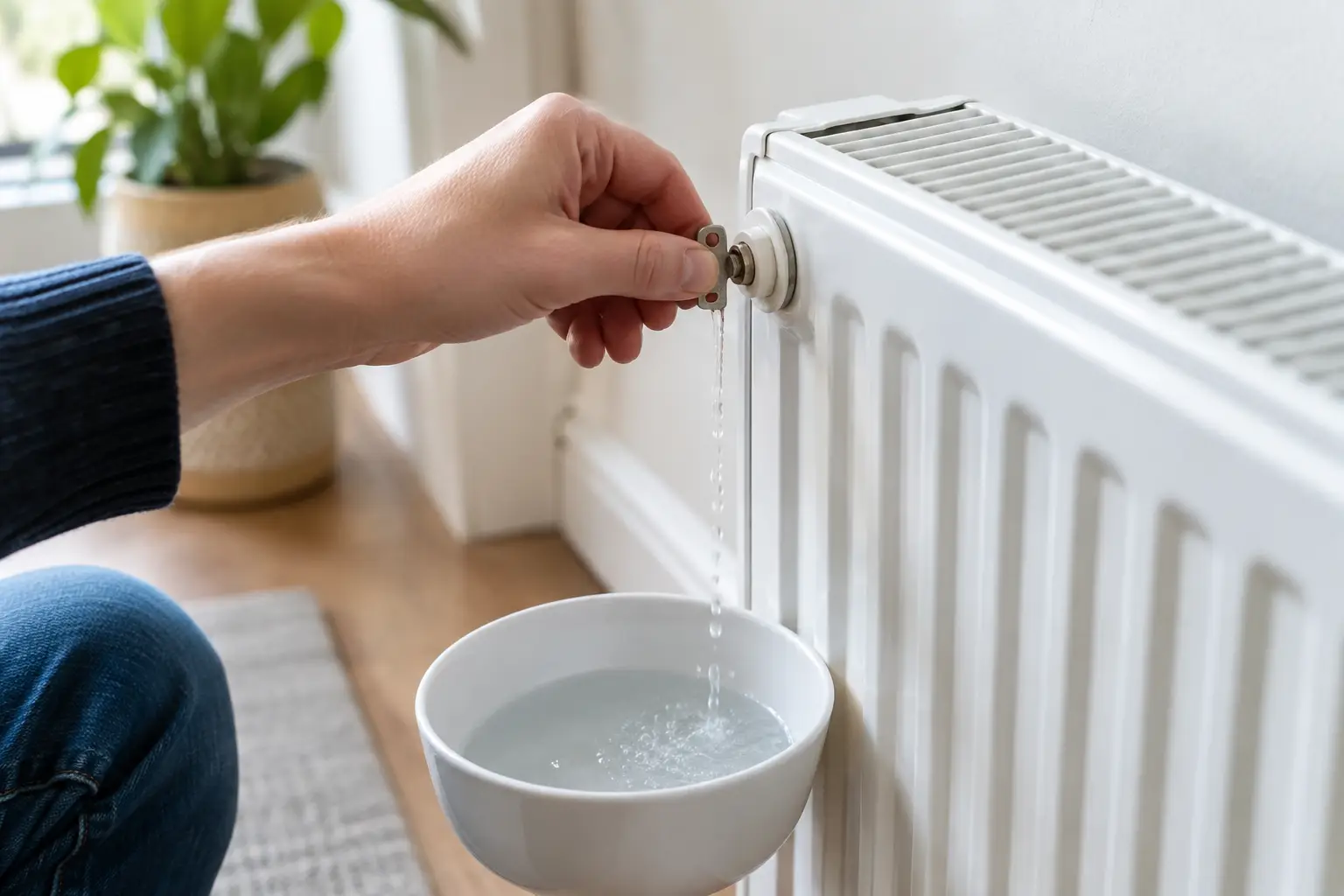
Place your towel beneath the bleed valve, which is normally located near the top corner of the radiator. Hold the container below it. Insert the radiator key and turn it slowly anti-clockwise by no more than a quarter turn. You should hear a gentle hiss as trapped air escapes.
Keep the valve open only until water begins to emerge in a steady flow. Close it by turning the key clockwise, taking care not to overtighten it. The valve needs to be secure, not forced. Wipe away any water and check that the valve is dry once you have finished.
Repeat the process for each radiator that needs attention. Do not open the bleed valve too far. If it comes loose, it can be difficult to control the flow of water and may damage the fitting. A small turn is usually all that is required.
Once you have finished, check the boiler pressure again. Releasing air can lower pressure in a sealed central heating system. If the gauge has fallen below the recommended level, the system may need topping up using the filling loop or filling arrangement fitted to your boiler. Only do this if you are confident with the instructions for your particular boiler. Adding too much pressure can trigger a discharge from the safety valve, while repeated pressure loss needs professional investigation.
Test the heating after bleeding
Turn the heating back on and give the radiators time to reach temperature. They should now feel evenly warm from top to bottom. A very slight temperature difference can be normal, particularly in larger radiators, but a distinctly cold upper section suggests air remains inside.
Check the bleed valve again after the system has warmed up. A drip, even a small one, should not be ignored. Try gently tightening the valve a little further. If it continues to leak, turn the heating off and arrange for an engineer to repair or replace the valve. Do not rely on makeshift sealants or tape around a heating fitting.
If one radiator remains cool while others heat properly, check that both radiator valves are open. The thermostatic radiator valve may be set too low or have a stuck pin, especially after being unused through warmer months. This is often a simple fix, but it should be handled carefully to avoid damaging the valve head or causing a leak.
Common mistakes that can cause bigger problems
The most common mistake is bleeding radiators while the heating is running. It may seem quicker, but it increases the chance of releasing hot water and makes it harder to get a clear result. Letting the system cool first is a small delay that makes the task safer.
Another is assuming frequent bleeding is normal. Most well-maintained systems should not need attention every few weeks. Air can enter through tiny leaks, poor pressure management, failing components or corrosion within the system. Continually topping up a sealed system introduces fresh water and oxygen, which can contribute to internal corrosion over time.
Homeowners also sometimes confuse balancing with bleeding. Bleeding removes trapped air. Balancing adjusts the flow of hot water between radiators so that rooms warm at a more even rate. If radiators are all hot but rooms near the boiler heat much faster than those further away, the system may need balancing rather than bleeding.
Finally, do not use excessive force on old valves. Ageing bleed screws, corroded fittings and worn radiator valves can fail when disturbed. If a valve looks heavily corroded, has previously leaked or will not turn easily, it is wiser to stop and seek advice.
When to call a heating engineer
A qualified engineer can identify whether poor heating is caused by air, sludge, low pressure, a failing pump, faulty controls or a boiler fault. This is particularly valuable when the same problem returns after you have followed the basic steps.
Arrange professional help if you notice any of the following:
- Your boiler pressure drops regularly or will not hold steady.
- Several radiators are cold at the bottom or heat unevenly.
- There is visible water from a radiator, valve, pipe or boiler.
- The boiler is making unusual noises, locking out or displaying an error code.
- You are unsure how to repressurise the system safely.
For households in Maidstone and the surrounding Kent area, Dacey Heating Engineers can assess the full system rather than simply treating the symptom. With more than 25 years of hands-on experience, we provide clear advice and practical heating repairs designed around your home, with minimal disruption.
Keep your heating system working efficiently
Bleeding radiators when they show clear signs of trapped air can improve comfort and help your boiler heat your home more effectively. It is also worth booking regular boiler servicing, keeping an eye on pressure and dealing with small leaks promptly. These routine checks give you a better chance of finding developing faults before the heating is needed most.
If your radiators are still unreliable after bleeding, trust what your home is telling you. A prompt, professional inspection can restore even warmth and give you confidence that your heating system is ready for the colder days ahead.

