

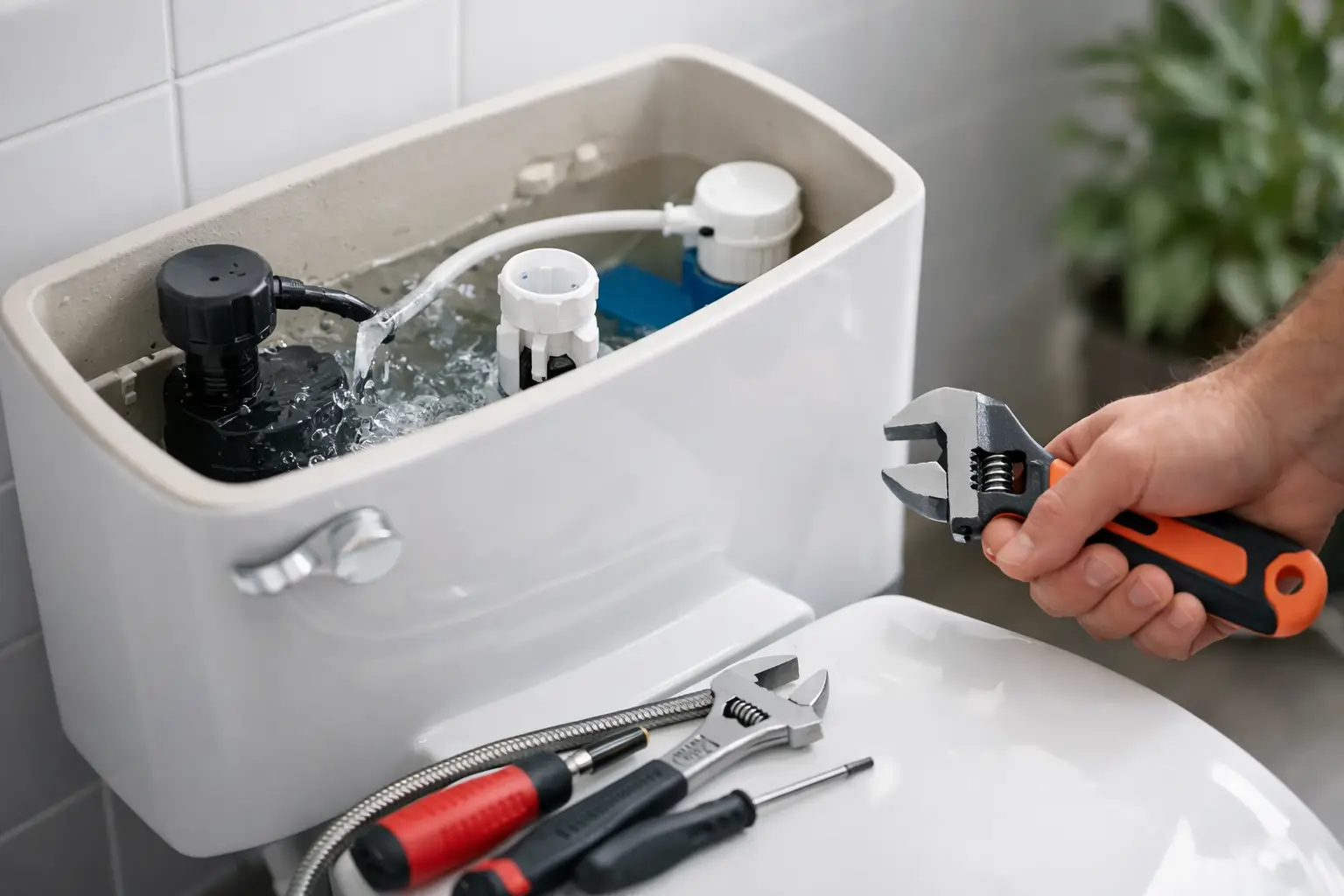
A toilet that refills every few minutes can be easy to ignore at first, particularly if the noise fades into the background of a busy household. But repair of a constantly running toilet should not be put off for long. A continuous trickle can waste a surprising amount of water, raise your water bill and, in some cases, point to a worn part inside the cistern that will eventually fail completely.
The good news is that many running toilets have a straightforward cause. A few careful checks can help you understand what is happening and whether it is sensible to make a small adjustment or call a local plumber. If you are unsure, leave the cistern alone and arrange professional help. Water damage and a non-flushing toilet are far more disruptive than a prompt repair.
Why a toilet keeps running
Most modern toilets have a cistern that stores water until you flush. When the handle or push button is used, a flush valve releases water into the pan. Once the water level has dropped, the inlet valve refills the cistern and then shuts off at the correct level.
A running toilet occurs when one part of that process does not close properly. You may hear a regular hissing sound, see water moving in the pan after the flush has finished, or notice that the cistern repeatedly fills for a few seconds at a time. The exact symptom matters because it helps identify the likely fault.
The two most common causes are water escaping slowly through the flush valve and an inlet valve that is not shutting off. Both are usually repairable, but the correct part and method depend on the type and age of your toilet.
Water leaking through the flush valve
If water is continually entering the pan, the seal at the base of the flush valve may be worn, distorted or coated with limescale. This rubber seal is designed to sit tightly after flushing. Over time, it can harden or become uneven, allowing a small but constant amount of water to pass through.
The cistern then detects that its water level has fallen and refills itself. This cycle can continue day and night. In hard-water areas of Kent, limescale can make this issue more likely, especially in older cisterns.
A damaged flush valve seal is often a modest repair, but it is important to fit the right replacement. Universal components can be useful, although they do not suit every cistern. An ill-fitting seal may stop the problem briefly before it returns.
An inlet valve that will not switch off
The inlet valve controls the fresh water entering the cistern. Older toilets may have a traditional float on an arm, while newer models often use a compact internal float valve. If the float is set too high, damaged or obstructed, water can rise above its intended level.
Many cisterns have an internal overflow. Rather than spilling onto the floor, excess water runs into the pan. This is safer for the home, but it can make the fault less obvious. You may simply see a faint ripple in the toilet bowl and hear water entering the cistern.
Sometimes the float can be adjusted, but a valve that continues to stick or overfill often needs replacing. The work should also include checking that the isolation valve operates properly, so the water supply can be safely turned off in future.
A faulty push button or flushing mechanism
On dual-flush toilets, a push button can occasionally stick or fail to return to its correct position. This leaves the flush valve slightly open, allowing water to escape. The same issue can happen with a worn handle, chain or cable in older cisterns.
Do not force a button that feels stiff. Plastic fittings can become brittle over time, and applying pressure may turn a minor internal repair into a broken lid or damaged mechanism. A plumber can identify whether the button itself is at fault or whether the problem lies lower down in the flush valve.
Safe checks before a running toilet repair
You do not need to dismantle the cistern to make a few useful observations. First, remove the cistern lid carefully if it is a close-coupled toilet. Ceramic lids can be heavy and may crack if knocked against tiles or the edge of the pan. With concealed cisterns, access is usually behind the flush plate and is best handled with care.
Flush once and watch what happens as the cistern refills. If the water level rises until it reaches an overflow tube, the inlet valve or float is the probable cause. If the water level settles below the overflow but you can see water continuing to run into the pan, the flush valve seal is more likely to be leaking.
A simple dye test can also help. Add a little food colouring to the cistern water and do not flush for around 20 to 30 minutes. If coloured water appears in the pan, water is escaping through the flush valve. Avoid using harsh chemical cleaners inside the cistern, as they can damage rubber seals and plastic components.
If there is water around the base of the toilet, on the floor, or on a ceiling below, stop using the toilet where possible and seek help promptly. That is different from an internal running fault and may indicate a failed connection, cracked fitting or leaking waste pipe.
Repair of a constantly running toilet: when to call a plumber
A confident homeowner may be able to replace a clearly identified seal or adjust a compatible float mechanism. However, it depends on access, the cistern design and the condition of the existing fittings. Modern concealed cisterns, old corroded valves and toilets with limited isolation can all make a seemingly small job more complicated.
Calling a plumber is the sensible choice when you cannot isolate the water, the cistern is leaking externally, replacement parts are unclear, or an adjustment has not stopped the running. It is also worthwhile if the toilet has more than one problem, such as a weak flush, a stiff push button and a slow refill. Repairing the system as a whole can prevent another call-out soon afterwards.
An experienced plumber will identify the source of water loss, check the condition of the inlet and flush mechanisms, fit suitable components and test several flushes before leaving. They should also make sure the water level is correctly set and that there are no leaks around the cistern connections.
For homeowners in Maidstone and the surrounding Kent area, Dacey Heating Engineers provides straightforward plumbing repairs with the care you would expect from a local family-run business. Clear advice matters: you should know what has failed, what work is recommended and why before the repair goes ahead.
Preventing the problem from returning
Toilet mechanisms are working parts, and they naturally wear over time. There is no need to replace a sound cistern simply because one internal seal has failed. In many cases, replacing the worn component is the most practical and cost-effective option.
Keeping the cistern free from harsh chemicals and responding when you first notice a hiss, trickle or intermittent refill will help. If your property has hard water, limescale may need occasional attention, but avoid scraping or forcing delicate plastic parts. A professional can clean or replace affected components without disturbing the rest of the assembly.
It is also wise to locate the toilet’s isolation valve before an emergency arises. It is often on the pipe feeding the cistern, although its position varies. If the valve is stiff, seized or missing, ask for it to be checked during the repair. Being able to isolate one appliance can protect the rest of your household water supply.
A quiet toilet should stay quiet between flushes. Acting on a running cistern early protects water, avoids unnecessary cost and keeps a small plumbing fault from interrupting the comfort of your home.

