

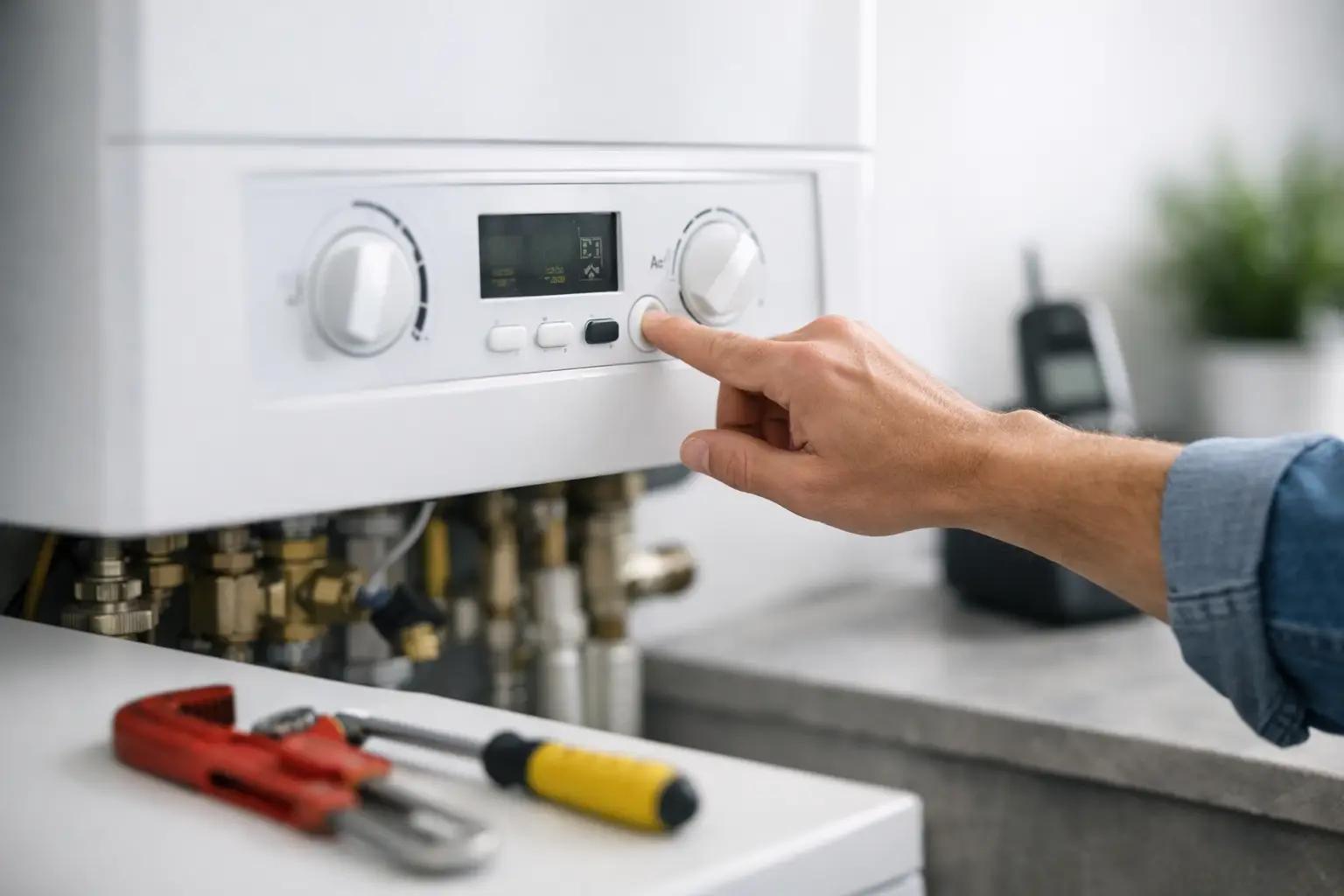
A boiler that has stopped during a cold morning can make the whole house feel unsettled very quickly. Knowing how to reset boiler safely can sometimes restore your heating or hot water after a minor fault, but a reset is not a cure for an underlying problem. The aim is to make a few calm checks, reset the appliance once if it is safe to do so, and know when to leave the job to a Gas Safe registered engineer.
First, make sure it is safe to approach the boiler
Before looking at buttons, displays or pressure gauges, check for anything that suggests a safety issue rather than a simple lockout. If you can smell gas, suspect a gas leak, or hear an unusual hissing sound near the meter or boiler, do not attempt a reset. Avoid operating electrical switches, extinguish any naked flames, open doors and windows if it is safe to do so, leave the property, and call the National Gas Emergency Service on 0800 111 999.
A carbon monoxide alarm sounding also needs immediate action. Get everyone outside into fresh air, then seek urgent help. Symptoms such as headaches, dizziness, nausea, breathlessness or confusion can have many causes, but should never be ignored where a gas appliance is involved.
Do not reset the boiler if you see water leaking from it, scorching around the casing, soot marks, a damaged flue, or repeated electrical tripping. Turn the boiler off at its controls if you can do so safely and arrange for an engineer to assess it. Never remove the boiler casing or try to investigate internal components yourself.
Why boilers need resetting
Modern boilers are designed to shut down when they detect a fault that could affect safe or reliable operation. This is often called a lockout. The display may show a fault code, a flashing light or a reset symbol, depending on the make and model.
Some lockouts are caused by temporary issues. A brief interruption to the gas supply, a power cut, low system pressure or a frozen condensate pipe during very cold weather can all prevent a boiler from firing. Once the cause has been resolved, a single reset may allow it to start normally again.
Other faults will return because there is a component issue, a circulation problem, poor combustion, a leak or a control fault. Repeatedly pressing reset can mask the pattern an engineer needs to diagnose and may leave your home without heating again at the worst possible time.
How to reset a boiler safely: the sensible checks
Start by checking the thermostat and programmer. Make sure the heating is set to be on, the room thermostat is turned above the current room temperature, and the boiler has power. If the display is blank, check the fused spur beside the boiler and your consumer unit. If a circuit has tripped more than once, do not keep resetting it. That requires professional attention.
Next, look at the boiler display and write down any fault code before doing anything else. A photo is useful too. The code helps identify whether the issue may be as straightforward as low pressure or whether it needs an engineer from the outset. Your boiler handbook gives model-specific guidance, so follow it where it differs from general advice.
Check the pressure gauge if you have a sealed central-heating system. When the system is cold, many boilers operate at around 1 to 1.5 bar, although the correct range for your appliance is the one stated in its instructions. If the reading is clearly below 1 bar, the boiler may lock out because there is not enough water in the system.
If you have previously been shown how to repressurise your system and the filling loop is accessible, you may be able to do this carefully. Add water slowly, watching the gauge, and stop at the recommended pressure. Close the valves fully afterwards. Do not overfill the system, and do not continue if you are unsure which valves to use. Pressure that drops repeatedly is not something to keep topping up – it can indicate a leak or a fault that needs investigation.
If the weather is freezing and you have a condensate pipe running outside, a frozen pipe may be the reason for the lockout. The condensate pipe is usually a white plastic pipe leading from the boiler to an external drain. If it is frozen, use warm, not boiling, water and a warm cloth to thaw it gradually. Never use a naked flame, boiling water or forceful tools, as the pipe can crack. Once it is clear, try one reset.
Reset the boiler once, then wait
The reset control may be a button, a dial position or an option on the display. On many models, you press and hold the reset button for a few seconds. Others require the selector to be turned to reset and then returned to its normal position. Check the manufacturer’s instructions if you are not certain.
After resetting, give the boiler a few minutes. You may hear the fan, pump and ignition sequence as it attempts to start. If it fires and stays running, check that radiators begin to warm up and that hot water is available if you have a combi boiler.
If the boiler locks out again, do not keep trying. One reset after sensible basic checks is reasonable. A second attempt may be appropriate only where the handbook specifically advises it and the fault was clearly temporary, such as after a known power interruption. Beyond that, booking a qualified engineer is the safer and more cost-effective choice.
Common situations where a reset will not solve the problem
A boiler reset cannot repair a mechanical or safety fault. It may not help if the pressure is falling due to a leak, the boiler is making banging or whistling noises, radiators are cold in patches, or the hot water keeps cutting out. Likewise, an error code relating to ignition, fan operation, flue safety or overheating should be treated as a reason to seek professional advice rather than a prompt to keep restarting the appliance.
There are also household checks that can save time without interfering with the boiler. Make sure the gas meter has credit if you use a prepayment meter, confirm that the external condensate pipe is not blocked, and check that the programmer settings have not changed after a power cut. These checks are useful, but they should not involve opening the boiler or touching gas pipework.
For homes with older boilers, the reset arrangement may be less obvious and fault information may be limited to coloured lights. In that case, note which lights are showing, when the issue started and whether heating, hot water or both have been affected. This information gives an engineer a better starting point.
When to call a Gas Safe registered engineer
Call an engineer promptly if the boiler will not restart after a safe reset, the same fault returns, pressure keeps dropping, there is any leak, or you are simply not confident about the next step. The same applies if the boiler is overdue its annual service. Servicing helps identify developing faults before they become a no-heating emergency and checks that the appliance is operating safely and efficiently.
For households in Maidstone and the surrounding Kent area, Dacey Heating Engineers can assess boiler faults clearly and explain the practical options without unnecessary jargon. With more than 25 years of hands-on experience, the focus is on restoring safe, dependable heating with as little disruption to your home as possible.
A small reset can be useful – recurring faults need attention
A boiler that needs one reset after a temporary interruption may be back to normal. A boiler that asks to be reset regularly is communicating that something is wrong. Keep the fault code, make a note of what happened beforehand, and arrange a professional inspection rather than waiting for the next cold spell. Your home should feel warm, safe and predictable, not dependent on a button press.

